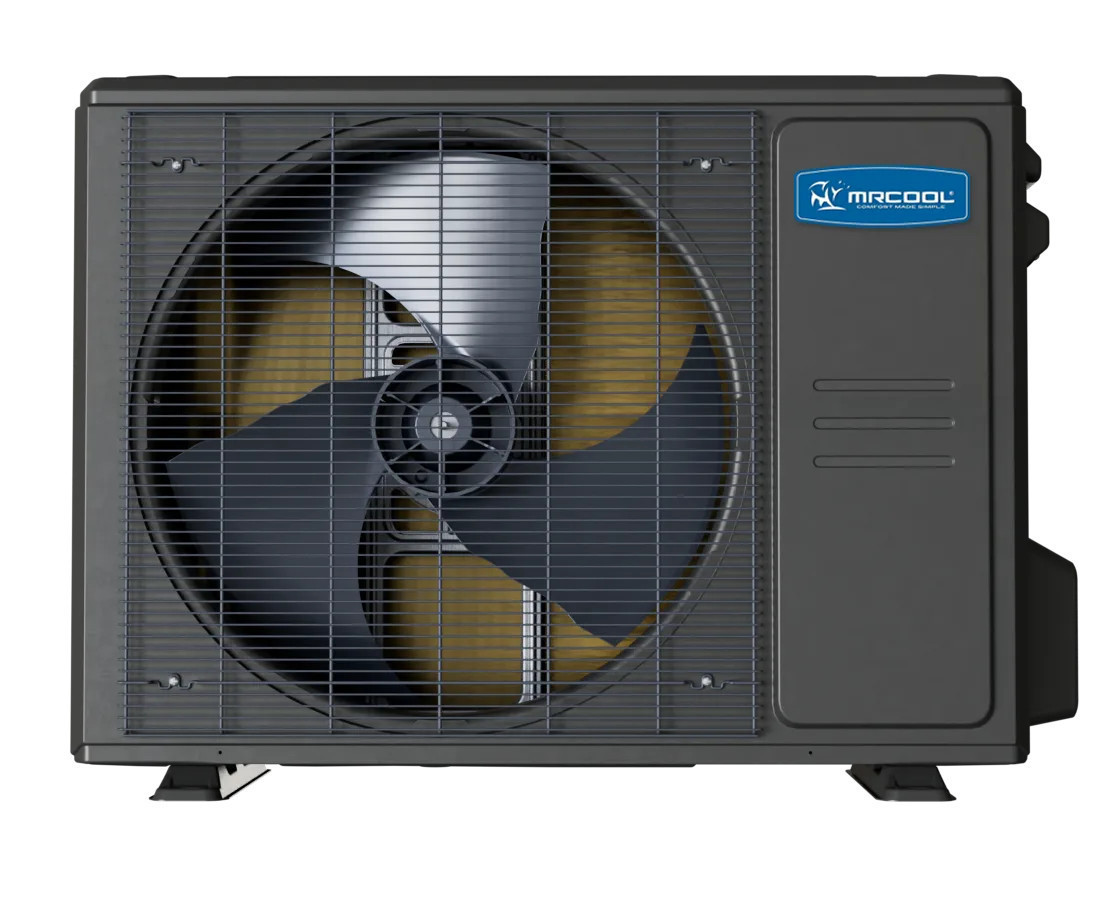
The residential and light commercial comfort equipment market has experienced a genuine technology transition over the past decade whose pace has accelerated rather than plateaued as the advantages of ductless mini split systems have become more widely understood and the installation barriers that limited their adoption have progressively lowered. What was once a niche technology associated primarily with hotels and international markets has become a mainstream residential choice whose installed base grows faster each year as homeowners, contractors, and building owners discover the combination of efficiency, flexibility, and zone-level control that ductless technology provides in ways that conventional ducted systems fundamentally cannot.
The mr cool universal product line has established a specific position within this growing market by serving the professional HVAC contractor community with ductless mini split systems whose installation approach aligns with the conventional refrigerant handling methods that experienced technicians already apply to other equipment categories. Understanding what this product line offers, how it fits within the broader ductless mini split landscape, and what the selection and installation process involves produces better outcomes for every project that considers this technology.
How Ductless Mini Split Systems Actually Work
The Refrigerant Circuit Fundamentals
Every ductless mini split system operates on the vapor compression refrigeration cycle whose fundamental principles apply equally to window air conditioners, central split systems, and the most sophisticated variable refrigerant flow commercial installations. A compressor in the outdoor unit pressurizes refrigerant vapor, raising its temperature and pressure before it flows to the condenser coil where it releases heat to the outdoor air and condenses to liquid. This liquid refrigerant flows through the refrigerant line set to the indoor unit’s metering device, which reduces its pressure and allows it to evaporate in the indoor evaporator coil, absorbing heat from the indoor airstream in the process. The resulting low-pressure vapor returns to the outdoor compressor to repeat the cycle continuously during operation.
What distinguishes heat pump ductless mini split systems from cooling-only configurations is the reversing valve in the outdoor unit that allows refrigerant flow direction to be switched, making the indoor coil function as the condenser during heating mode and the outdoor coil function as the evaporator. This reversal moves heat from outdoor air to the indoor space during heating operation, delivering the efficiency advantage of heat pump heating — moving heat rather than generating it — without requiring separate heating equipment.
The mr cool universal product line implements this standard refrigerant circuit through conventional refrigerant connections using copper line sets field-connected and charged by EPA 608 certified technicians, distinguishing it from the DIY Series whose pre-charged factory line sets eliminate the refrigerant handling requirement. This conventional approach provides installation flexibility that pre-charged alternatives cannot match in complex installation scenarios.
Inverter Technology and Why It Matters for Daily Operation
The inverter-driven variable-speed compressor technology incorporated in mr cool universal systems represents the advancement that most fundamentally distinguishes current generation ductless mini split systems from both earlier ductless products and from conventional fixed-speed split systems. Understanding what inverter technology actually does during daily operation clarifies why it produces the efficiency and comfort advantages that characterize modern ductless systems.
A conventional single-speed compressor has two states — on at full capacity, or off. The thermostat determines which state applies based on whether the space temperature has reached setpoint, producing a cycling pattern where the compressor runs at full output until setpoint is achieved, then shuts off while temperature drifts, then restarts when temperature drift exceeds the thermostat’s differential. This cycling pattern produces temperature swings whose magnitude depends on the thermostat’s differential setting and the system’s relationship between capacity and load — a cycle pattern that becomes more frequent when the system is significantly oversized relative to the actual load.
An inverter-driven compressor modulates its speed across a continuous range from minimum to maximum output, running at whatever speed is needed to match the actual conditioning demand at any moment. When a space is close to setpoint and the load is modest, the compressor runs slowly, consuming minimal energy while maintaining precise temperature. When demand is high — during the initial cooldown or warm-up of a space, or during peak weather conditions — the compressor runs at higher speeds to deliver the capacity the situation requires. This continuous modulation produces temperature stability that single-speed cycling cannot achieve, while delivering efficiency across the full operating range that fixed-speed systems only approach at their optimal operating point.
Mr. Cool Universal: The Professional Installation Line
Why the Universal Line Exists Within MrCool’s Portfolio
The mr cool universal product line addresses a specific market segment within MrCool’s broader customer base — professional HVAC contractors who install ductless mini split systems using the conventional refrigerant handling methods that their existing equipment and certification already supports. These contractors value the installation flexibility that conventional line set connections provide, the familiarity of standard refrigerant circuit procedures, and the ability to optimize system installation for each project’s specific geometry without the constraints that pre-charged line sets impose on routing and length.
For this market segment, the DIY Series pre-charged approach — despite its genuine innovation — introduces installation constraints that experienced contractors prefer to avoid. Pre-charged line sets of fixed lengths limit routing flexibility for installations where the optimal indoor-to-outdoor path does not match an available pre-charged length. Quick-connect fittings, while accessible to homeowners, feel constraining to technicians accustomed to the routing flexibility that conventional brazed or flared connections support. The Universal line provides the MrCool performance and reliability reputation through installation methods that align with professional practice.
Capacity Range and Configuration Options
The mr cool universal product line is available across a capacity range that covers the most common residential and light commercial applications where ductless mini split systems are appropriate. Single-zone configurations pairing one outdoor unit with one indoor air handler serve the individual room and zone applications that represent the majority of ductless installations. Multi-zone configurations connecting multiple indoor air handlers to a single outdoor unit serve applications where several spaces require independent conditioning from shared outdoor infrastructure.
The capacity range available within the Universal line allows appropriate sizing for spaces from small bedrooms requiring modest BTU capacity to larger open-plan areas requiring the higher output that larger capacity configurations provide. Selecting the appropriate capacity requires actual load calculation for the specific space rather than application of general square footage rules that approximate average conditions rather than the specific thermal characteristics of the individual space.
Multi-zone Universal configurations require system design attention that single-zone installations do not — specifically, matching the combination of indoor unit capacities to the outdoor unit’s total capacity in ways that ensure adequate conditioning for all zones during simultaneous operation without oversizing that increases equipment cost and potentially affects part-load efficiency. Manufacturers provide capacity matching guidelines that define which indoor unit combinations are appropriate for each multi-zone outdoor unit configuration.
Installation Process for Universal Line Systems
The installation process for mr cool universal ductless mini split systems follows the standard procedures that experienced HVAC technicians apply to conventional mini-split installations. Indoor unit mounting establishes the air handler in the appropriate location for the specific zone, with attention to clearances, drainage slope, and the wall penetration location that the refrigerant line set, electrical supply, and condensate drain will route through. Outdoor unit placement follows the manufacturer’s clearance requirements on all sides while considering accessibility for future service, distance from outdoor living areas where operating sound is a concern, and structural support adequacy for the unit’s operating weight.
Refrigerant line set installation using appropriately sized copper ACR tubing — sized to the Universal line specifications for the specific indoor unit capacity being installed — routes through the wall penetration in insulated form, following a path that minimizes length while accommodating the installation geometry. Field connections at both indoor and outdoor units use the flare or braze fittings appropriate for the specific connection type, completed by the EPA 608 certified technician performing the refrigerant work.
System evacuation using a vacuum pump capable of achieving and holding the deep vacuum that refrigerant circuit commissioning requires removes air and moisture from the line set before refrigerant is introduced. Adequate evacuation time — longer for larger line set volumes and for line sets that have been exposed to moisture — is critical for long-term system reliability because moisture in the refrigerant circuit creates acid that attacks compressor components over time. Refrigerant charging to the manufacturer’s specified quantity, adjusted for line set length where documentation requires it, completes the refrigerant circuit commissioning.
Where Ductless Mini Split Systems Excel
Applications Where Ductless Outperforms Ducted Alternatives
Ductless mini split systems provide their strongest value relative to ducted alternatives in specific application scenarios whose characteristics align with the fundamental advantages that ductless technology provides. Understanding these application scenarios clarifies where ductless investment produces returns that justify any premium over ducted alternatives and where conventional systems remain more practical.
Spaces without existing ductwork represent the most straightforward ductless advantage case. Additions to existing homes, converted garages and basements, detached accessory dwelling units, and older homes built before central air conditioning became standard all share the characteristic that conditioning them through a ducted system would require either extending existing ductwork — an expensive and often invasive undertaking — or installing entirely new ductwork infrastructure whose cost may rival or exceed the ductless equipment itself. Ductless mini split systems serve these spaces through a minimal-invasion installation requiring only the line set penetration through the exterior wall, avoiding the ductwork infrastructure cost entirely.
Multi-family buildings where individual unit conditioning is legally or practically required represent another strong ductless application scenario. Each unit receives its own outdoor unit and indoor air handler whose operation and utility billing are entirely independent, providing individual occupant control and simplified utility metering that shared central systems cannot provide as cleanly.
Commercial applications including server rooms, medical offices, wine storage, and other spaces with specific temperature or humidity requirements that differ from surrounding areas benefit from the independent zone control that ductless systems provide. These specialty spaces often have conditioning requirements that conditioning as part of the building’s central system cannot meet precisely because the central system is designed for typical occupancy conditions rather than the specific requirements of the specialty application.
Efficiency Advantages Over Conventional Systems
Ductless mini split systems eliminate the duct losses that reduce the effective efficiency of ducted systems in ways that rated equipment efficiency does not capture. When an air conditioner rated at a specific SEER delivers conditioned air through a duct system with twenty percent leakage into unconditioned attic space, the effective system efficiency is substantially below the rated equipment efficiency because a significant fraction of the cooling output never reaches the conditioned space. The duct efficiency losses that characterize many existing residential duct systems — a combination of leakage and heat transfer through poorly insulated ductwork in unconditioned spaces — can reduce effective system efficiency by fifteen to thirty percent compared to what the rated equipment efficiency suggests.
Ductless mini split systems deliver conditioned air directly to the conditioned space without intermediate ductwork losses, which means their rated efficiency more accurately represents their actual delivered efficiency than ducted system efficiency ratings that do not account for duct system losses. This efficiency advantage is most significant in homes with duct systems that route substantially through unconditioned spaces — attics, crawlspaces, garages — where heat transfer between the conditioned air in the ducts and the unconditioned surrounding environment reduces the temperature differential that the conditioned air delivers to living spaces.
Sizing and Selection Considerations
Load Calculation for Individual Zones
Proper sizing of ductless mini split systems for individual zones requires load calculation that accounts for the specific thermal characteristics of each zone rather than simply dividing the whole-building load by the number of zones being conditioned. Each zone has its own combination of floor area, insulation quality, window area and orientation, ceiling height, and exposure to solar gain and heat loss that produces a zone-specific load profile that may differ substantially from what proportional allocation of the whole-building load would suggest.
A south-facing bedroom with large windows and poor insulation may have a cooling load per square foot that is double what a north-facing bedroom with good insulation in the same home requires. Sizing both zones to the same capacity based on equal square footage would either oversize one or undersize the other — producing the short-cycling or inadequate capacity problems that incorrect sizing reliably creates regardless of the technology involved.
Zone-level Manual J load calculation for each space being conditioned provides the reliable sizing foundation that produces equipment selection aligned with actual zone requirements. Online load calculation tools that accept zone-specific inputs — dimensions, insulation values, window specifications, orientation — make this calculation accessible without specialized software for most residential applications.
Noise Considerations in System Placement
The operating sound of ductless mini split systems — both indoor units and outdoor units — deserves attention during placement planning because sound levels that seem acceptable during equipment selection may be intrusive during daily operation if placement puts the sound-generating components in locations where occupants are sensitive to noise.
Indoor units of mr cool universal systems and other ductless mini split products produce operating sound at levels documented in the product specifications, typically measured in decibels at specified distances. These sound levels are generally modest — comparable to or quieter than the supply air noise that ducted system registers produce — but are perceived differently because the sound comes from the indoor unit itself rather than the distant air handler that ducted systems locate away from living spaces.
Bedroom installations deserve particular attention to operating sound because sleeping occupants are more sensitive to sound than active occupants in other spaces. Units at the lower end of their capacity range — sized appropriately for the space rather than oversized — operate at lower speeds and consequently lower sound levels than oversized units running at partial capacity to avoid overcooling. Proper sizing consequently improves both comfort and acoustic experience compared to oversizing that many installers default to as a safety margin.
FAQs About Mr. Cool Universal and Ductless Mini Split Systems
How does the mr cool universal differ from the mr cool diy series in practical installation terms?
The most significant practical difference involves refrigerant handling. The DIY Series uses factory pre-charged quick-connect line sets that complete the refrigerant circuit without EPA 608 certified technician involvement, making complete homeowner installation possible. The Universal line uses conventional refrigerant connections requiring certified technician involvement for line set connection, evacuation, and charging. This distinction makes the Universal line appropriate for professional installation while limiting its accessibility for homeowner self-installation. The Universal line provides greater installation flexibility through conventional line set routing without pre-charged length constraints.
What capacity range does the mr cool universal line cover and how do I determine what my application needs?
The Universal line covers capacity ranges from nine thousand BTU per hour at the small end to thirty-six thousand BTU per hour or larger for single-zone configurations, with multi-zone outdoor units supporting combinations of indoor units whose aggregate capacity reflects the total conditioning requirement. Determining the appropriate capacity for any specific application requires load calculation accounting for the zone’s dimensions, insulation quality, window area, orientation, ceiling height, occupancy, and local climate conditions. Using a Manual J load calculation tool with accurate inputs for these variables produces reliable capacity recommendations that rule-of-thumb sizing approaches cannot match in accuracy.
Can ductless mini split systems serve as the primary heating source in cold climates?
Standard ductless mini split systems including most Universal line configurations can serve as primary heating in moderate climates where winter temperatures rarely challenge standard heat pump performance limits. In cold climates where temperatures regularly fall below fifteen degrees Fahrenheit, standard ductless products experience declining capacity and efficiency that may require substantial backup heating engagement to maintain comfortable temperatures. Cold-climate products like the mr cool hyper heat line maintain better low-ambient performance and are more appropriate as primary heating in severe cold climates. The specific climate conditions at the installation location determine whether standard ductless capability is adequate for primary heating or whether cold-climate enhanced performance is necessary.
How long do ductless mini split systems typically last and what maintenance extends their service life?
Well-maintained ductless mini split systems from quality manufacturers typically provide fifteen to twenty years of reliable service. Regular filter cleaning at intervals appropriate for the installation environment — typically monthly during heavy use periods — prevents the airflow restriction and coil contamination that accelerate component wear. Annual professional service including refrigerant charge verification, electrical connection inspection, coil cleaning, and operational testing identifies developing issues before they produce premature failures. Outdoor unit clearance maintenance that prevents vegetation encroachment and debris accumulation maintains the airflow conditions that condenser performance depends on throughout the system’s service life.
What are the most common installation mistakes that affect ductless mini split system performance?
Inadequate system evacuation before refrigerant charging is among the most consequential installation errors because moisture remaining in the refrigerant circuit creates acid that attacks compressor components over time, producing premature failures whose root cause is not obvious without knowledge of the installation’s evacuation procedures. Incorrect line set sizing that produces pressure drop outside the system’s design parameters affects both capacity and efficiency throughout the system’s service life. Outdoor unit placement that provides inadequate clearance for condenser airflow reduces heat transfer efficiency and stresses the refrigerant circuit. Indoor unit placement that creates short-circuit between supply and return airstreams reduces effective air distribution to the conditioned space. Each of these errors is preventable through careful attention to manufacturer specifications during installation planning and execution.



Leave a Reply