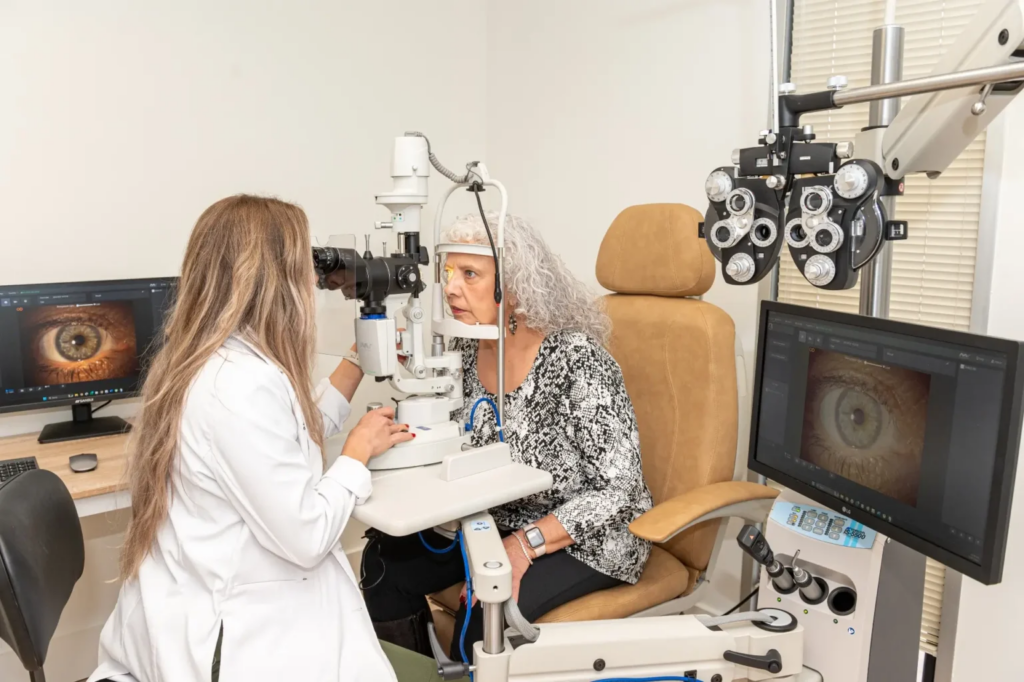
Vision problems are often linked to common refractive errors such as nearsightedness, farsightedness, and astigmatism. However, many people continue to experience blurry vision, glare, halos, or poor night vision even after wearing glasses or contact lenses. In many cases, these visual disturbances are caused by higher order aberrations.
Higher order aberrations are complex imperfections in the eye’s optical system that cannot be fully corrected with standard eyeglasses or traditional contact lenses. As eye care technology continues to advance, doctors and researchers are developing more precise diagnostic tools and innovative treatment methods to improve visual clarity and quality of life.
This article explains what higher order aberrations are, how they affect vision, the common causes, available correction methods, and the latest emerging technologies used in modern ophthalmology.
What Are Higher Order Aberrations?
Higher order aberrations are subtle optical irregularities in the eye that distort the way light enters and focuses on the retina. Unlike lower order aberrations such as myopia, hyperopia, and astigmatism, higher order aberrations are more complex and difficult to measure and correct.
These aberrations are usually caused by irregularities in the cornea, lens, or overall shape of the eye. They can significantly affect visual quality, especially in low-light conditions.
The most common types of higher order aberrations include:
- Coma
- Spherical aberration
- Trefoil
- Secondary astigmatism
Even small amounts of higher order aberrations can reduce contrast sensitivity and visual sharpness.
How Higher Order Aberrations Affect Vision
People with higher order aberrations often notice visual symptoms that standard prescription lenses cannot fully correct. These symptoms may become worse at night or in environments with dim lighting.
Common visual effects include:
Glare and Halos
Bright lights may appear surrounded by rings or glare, especially while driving at night.
Blurred or Distorted Vision
Objects may appear smeared, stretched, or less defined despite having updated prescription glasses.
Reduced Night Vision
Many individuals experience difficulty seeing clearly in dark conditions because pupil dilation increases the effect of higher order aberrations.
Poor Contrast Sensitivity
Distinguishing objects from their background may become difficult, especially in foggy or low-contrast environments.
Double Vision or Ghosting
Some people notice faint duplicate images or shadow-like visual effects around objects.
Common Causes of Higher Order Aberrations
Several factors can contribute to the development of higher order aberrations.
Irregular Corneal Shape
Conditions such as keratoconus can cause the cornea to become uneven, leading to severe optical distortions.
Refractive Surgery
Some patients develop higher order aberrations after LASIK or other refractive procedures if the corneal reshaping is imperfect.
Cataracts
Changes in the natural lens of the eye may increase optical irregularities over time.
Dry Eye Syndrome
An unstable tear film can temporarily distort light entering the eye and worsen visual quality.
Aging
As the eye ages, structural changes may naturally increase higher order aberrations.
Large Pupils
People with larger pupils may experience stronger visual distortions, particularly in dark environments.
Diagnosing Higher Order Aberrations
Modern eye clinics use advanced diagnostic technology to identify and measure higher order aberrations.
Wavefront Aberrometry
Wavefront technology creates a detailed map of how light travels through the eye. It measures even tiny optical imperfections that traditional eye exams may miss.
This technology is widely used before refractive surgery and for customized vision correction treatments.
Corneal Topography
Corneal mapping helps identify irregularities in the shape and curvature of the cornea.
Comprehensive Eye Examination
Eye specialists evaluate symptoms, pupil size, tear film stability, and overall ocular health to determine the severity of higher order aberrations.
Advanced Correction Methods for Higher Order Aberrations
Modern ophthalmology offers several advanced solutions for managing higher order aberrations and improving visual quality.
Wavefront-Guided LASIK
Wavefront-guided LASIK uses detailed eye mapping to customize the laser treatment for each patient. This personalized approach helps reduce existing higher order aberrations while correcting refractive errors.
Compared to traditional LASIK, wavefront-guided procedures often provide:
- Sharper night vision
- Better contrast sensitivity
- Reduced glare and halos
- Improved overall visual quality
Specialty Contact Lenses
Rigid gas permeable lenses and scleral lenses can create a smoother optical surface over the cornea. These lenses are especially helpful for patients with keratoconus or corneal irregularities.
Customized Intraocular Lenses
During cataract surgery, advanced intraocular lenses can help reduce spherical aberration and improve visual performance.
Adaptive Optics Technology
Adaptive optics systems adjust for optical distortions in real time. Although currently more common in research settings, this technology may become more widely available in future clinical practice.
Corneal Cross-Linking
For patients with progressive keratoconus, corneal cross-linking strengthens the corneal tissue and helps stabilize irregularities that contribute to higher order aberrations.
Emerging Technologies in Vision Correction
The field of vision science continues to evolve rapidly, offering promising solutions for patients with complex optical issues.
Artificial Intelligence in Eye Diagnostics
AI-powered imaging systems can analyze wavefront data with greater precision and help doctors create highly personalized treatment plans.
Next-Generation Laser Systems
Modern laser platforms are becoming increasingly accurate, reducing the risk of inducing additional higher order aberrations during surgery.
Smart Contact Lenses
Researchers are developing advanced contact lenses that dynamically adjust optical performance and potentially compensate for aberrations in real time.
Enhanced Retinal Imaging
Improved retinal imaging systems allow eye specialists to better understand how optical distortions affect visual processing.
Can Higher Order Aberrations Be Prevented?
Although not all higher order aberrations can be prevented, several strategies may help reduce the risk of worsening symptoms.
Schedule Regular Eye Exams
Routine eye examinations help detect early changes in corneal shape or lens clarity.
Treat Dry Eyes Promptly
Maintaining a stable tear film improves optical quality and reduces temporary distortions.
Choose Experienced Surgeons
Patients considering refractive surgery should select qualified surgeons who use modern wavefront-guided technology.
Protect Eye Health
Wearing UV-protective sunglasses and managing chronic health conditions may support long-term eye health.
Who Is Most Affected by Higher Order Aberrations?
Higher order aberrations can affect people of all ages, but certain groups may experience more significant symptoms.
These include:
- Individuals with keratoconus
- Patients after refractive surgery
- Older adults with cataracts
- People with severe dry eye syndrome
- Individuals with large pupils
- Patients with irregular corneal surfaces
Early diagnosis and appropriate treatment can greatly improve visual comfort and daily functioning.
The Future of Higher Order Aberration Correction
The future of vision correction is moving toward personalized and highly precise treatments. Advances in imaging, artificial intelligence, and adaptive optics are transforming how eye specialists diagnose and manage complex visual distortions.
As technology continues to improve, patients may soon benefit from even more accurate and minimally invasive solutions designed specifically for their unique optical profiles.
Conclusion
Higher order aberrations are complex optical imperfections that can significantly impact visual quality beyond standard refractive errors. Symptoms such as glare, halos, poor night vision, and blurry sight often indicate the presence of these subtle distortions.


Leave a Reply