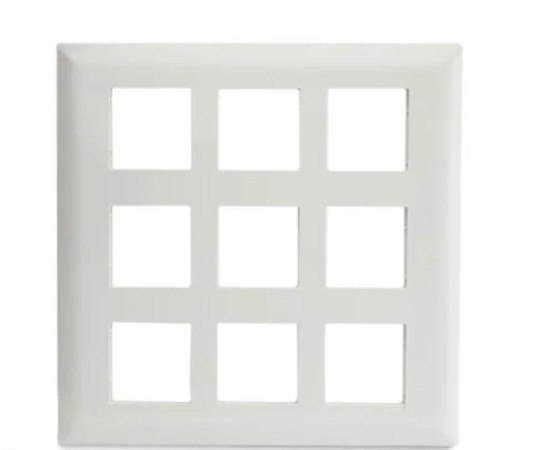
Electrical installations require carefully selected components to keep controls, connections, and devices organized and accessible. Modular plates and switching components serve different purposes, but both can contribute to efficient electrical arrangements in residential, commercial, and industrial environments. An 18 module plate can provide a structured mounting surface for multiple compatible modular electrical devices, while a Limit Switch can detect the position or movement of machinery and trigger an electrical response. Understanding their practical applications helps users select suitable components according to installation requirements, space, functionality, and operating conditions.
Organizing Multiple Electrical Controls
Modern electrical installations often require several switches, controls, and accessories in the same location. Instead of installing each component separately, modular systems can provide a more organized arrangement.
An 18 module plate can be used where several compatible modules need to be positioned together. The number of modules that can be accommodated depends on the dimensions and specifications of the selected system.
Typical applications may include:
- Lighting controls
- Fan controls
- Electrical switches
- Data or communication modules
- Other compatible modular accessories
This arrangement can make frequently used controls easier to access while maintaining a neat appearance.
Residential Lighting Control
Homes may require multiple switches for different rooms, lighting zones, fans, and other electrical functions. A modular plate can help bring several controls into a single organized location.
An 18 module plate is particularly useful when a larger number of compatible modules are required in one area. For example, a central control point could accommodate several lighting and appliance controls without requiring multiple separate mounting arrangements.
Common Residential Applications
- Living room lighting
- Bedroom lighting
- Decorative lighting
- Fan controls
- Other compatible modular controls
The exact combination depends on the electrical design and the modules selected for the installation.
Commercial Interior Applications
Offices, retail spaces, educational buildings, and other commercial environments may require numerous electrical controls in accessible locations.
A modular mounting arrangement can help organize controls for lighting and other electrical functions. Using a suitably sized plate can reduce visual clutter and provide a consistent installation layout.
The 18 module plate can therefore be useful in spaces where several compatible electrical modules need to be grouped together. It can support organized control points in areas such as offices, reception spaces, meeting rooms, and shared facilities.
Supporting Machinery Position Detection
Industrial machinery often contains moving components that need to be monitored. Position detection can help determine when a machine part has reached a particular location.
A Limit Switch is designed to respond when a mechanical component reaches a defined position. The resulting electrical signal can be used within a control system according to the application’s design.
Possible uses include:
- Detecting the end position of moving equipment
- Confirming that a mechanical component has reached a specific point
- Triggering a control response
- Supporting machine sequencing
- Indicating the position of mechanical parts
The specific switching arrangement depends on the equipment and control circuit.
Conveyor System Applications
Conveyor systems move materials or products between different points in a facility. Position detection can be important for controlling movement and coordinating different stages of an operation.
A Limit Switch can be positioned at a suitable point along a mechanical system to detect the movement or arrival of an object or component.
For example, when a moving component reaches a predetermined position, the switch can change its electrical state. This signal may then be incorporated into a control circuit to initiate another operation.
Benefits of Position Detection
- Helps identify defined movement positions
- Supports automated sequences
- Provides feedback to control systems
- Can help coordinate mechanical operations
Proper positioning and installation are essential for dependable operation.
Machine Safety and Interlocking Applications
Industrial machines may require electrical interlocking arrangements to prevent certain operations from occurring under unsuitable conditions. Position-sensitive switching components can be incorporated into control circuits for this purpose.
A Limit Switch may detect whether a guard, door, movable component, or mechanical section has reached a designated position. Depending on the control design, its signal can be used to permit, stop, or modify a machine operation.
Such systems should always be designed by qualified professionals and implemented according to applicable machinery and electrical safety requirements.
Material Handling Equipment
Material handling systems can include lifting mechanisms, moving platforms, mechanical gates, and other equipment that travels through defined positions.
Position detection helps control these movements by providing information about where a mechanical component is located.
A Limit Switch can be used to detect an endpoint or predetermined position. Its signal can then be integrated into the equipment’s control system.
Applications may include:
- Mechanical lifting equipment
- Automated gates
- Moving platforms
- Material handling mechanisms
- Mechanical positioning systems
The appropriate switch type should be selected according to movement, operating environment, mechanical force, and electrical requirements.
Control Panels and Electrical Enclosures
Control panels can contain multiple switches, indicators, controls, and other electrical components. In applications requiring several user controls, modular mounting systems can help maintain a structured layout.
An 18 module plate can provide space for multiple compatible modules in a single arrangement. This can be useful in control locations where operators need convenient access to several electrical functions.
Factors to Consider
Before selecting a modular plate, consider:
- Number of modules required
- Module dimensions
- Mounting arrangement
- Available installation space
- Material and construction
- Compatibility with the selected electrical accessories
These factors help ensure that the plate is suitable for the intended installation.
Automated Door and Gate Systems
Doors and gates that move automatically may need position feedback to determine whether they are fully open, closed, or at another defined point.
A Limit Switch can be incorporated into suitable control arrangements to detect mechanical positions. When the moving structure reaches the switch’s operating point, the electrical state can change and provide a signal to the associated control system.
This type of application can be useful in:
- Automated doors
- Mechanical gates
- Industrial access systems
- Moving barriers
- Equipment enclosures
The switch must be positioned correctly to avoid unreliable operation or unnecessary mechanical stress.
Electrical Installation Organization
Organized electrical installations can make controls easier to identify and maintain. Grouping compatible modules on an appropriately sized mounting plate can provide a consistent appearance and simplify access.
An 18 module plate can be considered when an installation requires a larger number of modular controls in one location. It can be especially useful where the electrical design includes several independent functions that need to remain clearly arranged.
Proper labeling can further improve usability by helping users identify the function of individual controls.
Choosing Components for Specific Applications
The correct component depends on the environment and intended function. A modular plate is primarily concerned with mounting and organizing compatible modules, whereas a position-sensitive switch is used for detecting mechanical movement or position.
When selecting either component, consider:
Installation Environment
Check whether the component will be exposed to dust, moisture, temperature changes, vibration, or mechanical impact.
Compatibility
Ensure the selected component is compatible with the associated electrical or mechanical system.
Operating Requirements
For switching applications, consider mechanical travel, operating force, switching frequency, and electrical ratings.
Maintenance
Components should remain accessible for inspection and replacement where required.
Conclusion
Electrical components perform different functions across residential, commercial, and industrial environments, and selecting them according to their intended applications is important. An 18 module plate can help organize multiple compatible electrical controls in a structured mounting arrangement, while a Limit Switch can provide position detection for machinery, conveyors, doors, gates, and other moving systems. Schneider Electric develops electrical and automation solutions for varied installation requirements, supporting organized control and efficient system management. By considering compatibility, operating conditions, electrical ratings, installation space, and maintenance needs, users can select components suited to their specific applications.



Leave a Reply