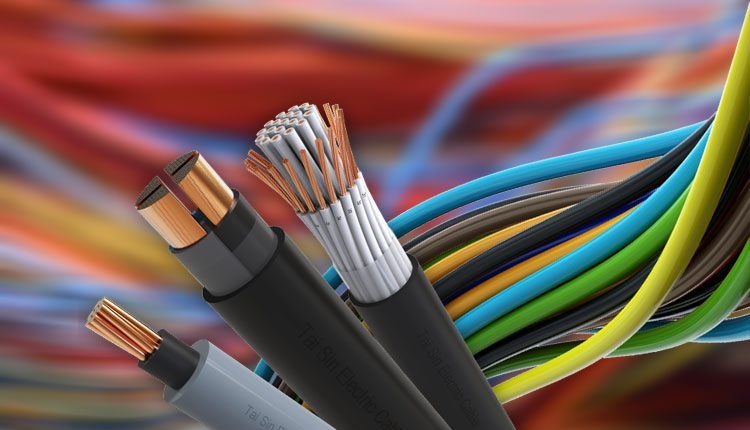
When you are managing a multi-million-dollar infrastructure project—perhaps a massive utility-scale array of Sustainable Solar Power Solutions or a new city-wide metro system—the stakes are unimaginably high. You are not just buying “wire”; you are buying the lifelines of the project. If those cables fail after they are buried under three meters of concrete or submerged in the ocean, the cost of repair is not just the price of the cable—it is the catastrophic cost of downtime and excavation. This is why the most critical stage of the procurement cycle is the Factory Acceptance Test (FAT). It is the final quality firewall that ensures the product you ordered is the product you are actually getting.
What Exactly is a Factory Acceptance Test (FAT)?
A Factory Acceptance Test is a rigorous, standardized series of inspections and tests performed at the manufacturer’s facility before the finished product is approved for shipping. It is usually witnessed by the buyer or a third-party inspection agency.
Think of it as a “pre-flight check” for cables. While the manufacturer does their own internal quality control during production, the FAT is a formal, transparent verification process. It proves that the cables meet the specific technical requirements of the contract, as well as international safety standards like IEC or British Standards.
Why FAT is Non-Negotiable for Large Projects
Many procurement managers are tempted to skip the on-site FAT to save time or travel costs, relying instead on the manufacturer’s test reports. This is a massive risk. Here is why FAT is essential:
1. Catching Errors Before They Leave the Gate
The primary goal of FAT is to identify any non-conformities while the product is still in the factory. If a reel of high-voltage cable has a microscopic void in the insulation, it is much easier (and cheaper) for the factory to scrap it and remake it right then and there. If that same defect is discovered only after the cable has been shipped halfway across the world and installed, the project faces months of delays and millions in losses.
2. Verifying Complex Specs
Modern cables are highly engineered. They might have specific requirements for fire resistance, UV stability, or chemical barriers. During a FAT, inspectors can verify the chemical composition of the polymers and the purity of the copper. They can witness “destructive” tests on small samples to ensure the cable behaves exactly as promised under stress.
3. Building Trust and Accountability
A FAT provides a high level of transparency. It allows the buyer to see the manufacturing process, the cleanliness of the facility, and the precision of the testing equipment. This level of direct oversight is a hallmark of a world-class Cable Manufacturer & Supplier in the UAE. When a manufacturer welcomes an open, rigorous FAT, it shows they have absolute confidence in their quality systems.
The Core Battery of Cable Tests
During a typical FAT for power or specialty cables, several key tests are performed:
Electrical Integrity Tests
- Conductor Resistance: Ensuring the copper is pure and the wire is the correct thickness so it doesn’t overheat.
- High-Voltage (Withstand) Test: Applying a voltage much higher than the cable’s rating for a set time (e.g., 5 to 15 minutes) to ensure the insulation doesn’t break down.
- Partial Discharge (PD) Test: This is the most critical test for Medium and High Voltage cables. It uses sensitive sensors to “listen” for tiny electrical sparks inside the insulation. If PD is present, the cable will eventually fail.
Mechanical and Material Tests
- Dimensions and Concentricity: Measuring the thickness of every layer with laser micrometers to ensure the core is perfectly centered.
- Tensile Strength and Elongation: Pulling samples of the insulation and jacket until they snap to ensure they have the required elasticity and toughness.
- Hot Set Test: Ensuring the insulation doesn’t deform excessively when it gets hot under heavy load.
Fire Performance (If Applicable)
For LSZH (Low Smoke Zero Halogen) or fire-resistant cables, the FAT might include a flame test where a sample is literally put in a furnace to measure how much smoke it produces and if it still conducts electricity while burning.
The Financial Logic: Preventing the “Site Reject”
The cost of sending an inspection team to a factory for a few days is negligible compared to the total project budget. However, the ROI is enormous. A “Site Acceptance Test” (SAT) happens once the cable arrives at the construction site. If the cable fails the SAT because a defect wasn’t caught during a FAT, the contractor is left with a massive problem. They have thousands of meters of useless, heavy cable sitting on a site, a looming construction deadline, and a legal battle over who pays for the shipping and delays. FAT eliminates this scenario entirely.
Conclusion: Zero-Defect Procurement
In the world of critical infrastructure, “close enough” is not good enough. Factory Acceptance Testing is the only way to guarantee that the engineering specifications on a piece of paper have been successfully translated into a physical product. By insisting on a thorough FAT, procurement teams protect their budgets, their timelines, and most importantly, the long-term safety of the electrical grid. It is the ultimate insurance policy for the unseen arteries of our modern world.
Your FAT Procurement Questions Answered (FAQs)
- What is the difference between FAT and SAT?
FAT (Factory Acceptance Test) happens at the manufacturer’s plant before the product is shipped. SAT (Site Acceptance Test) happens at the construction site after delivery and installation. FAT is for catching manufacturing defects; SAT is for ensuring the cable wasn’t damaged during shipping or installation. - Does every single reel of cable get tested during an FAT?
For high-voltage and mission-critical cables, yes—every single drum usually undergoes routine electrical testing. For lower-voltage or bulk building wires, the FAT usually involves “sample testing,” where the inspector randomly selects a certain percentage of the drums for detailed examination. - Who usually pays for the Factory Acceptance Testing?
The cost of the testing itself (the lab time and factory labor) is usually included in the cable’s purchase price. The cost of the inspectors’ travel and time is typically paid for by the buyer or the project contractor. - Can an FAT be done virtually?
Since the pandemic, “Remote FATs” have become more common. This involves using high-definition cameras, live-streaming of test equipment screens, and digital signatures. While convenient, most engineers still prefer physical presence to inspect the material texture and factory conditions firsthand. - What happens if a cable fails the FAT?
The manufacturer must identify the root cause of the failure. If it is a localized defect, that section of the cable is cut out. If it is a systemic issue (like a bad batch of plastic), the entire production run is rejected, and the manufacturer must restart the process at their own expense.





Leave a Reply