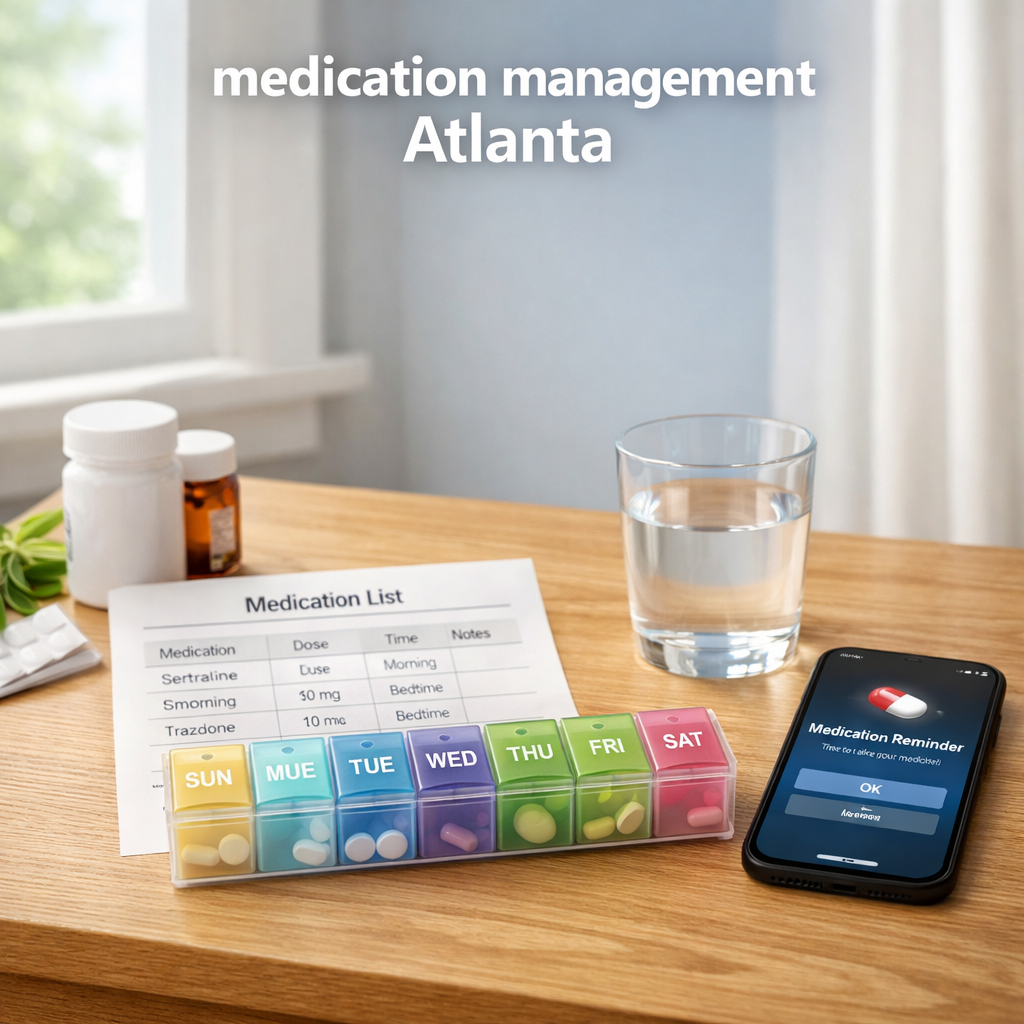
Medication management at home means taking the right medicine, in the right amount, at the right time. It helps people stay safe and feel better. Good planning can stop mistakes and health problems.
Many families in medication management Atlanta programs ask how to handle medicines the right way at home. This guide gives simple tips anyone can follow. It also helps people who are in mental health rehab and need daily support with medicine.
What Is Medication Management?
Medication management means:
- Knowing what medicine you take
- Knowing why you take it
- Taking it the right way
- Watching for side effects
It is not just about swallowing a pill.
It also means:
- Storing medicine safely
- Checking refill dates
- Talking to a doctor about changes
For people with mental health needs, this is very important. Missing doses can cause mood changes, sleep problems, or anxiety.
Why Medication Problems Happen at Home
Many mistakes happen at home. Not in hospitals.
Here is why:
1. Too Many Medicines
Some people take:
- Pills in the morning
- Pills at night
- As-needed medicine
- Vitamins
It gets confusing.
2. Poor Memory
Some mental health conditions affect memory. People may forget if they took a dose.
3. No Clear Routine
Taking medicine at different times each day causes mistakes.
4. Side Effects
If a person feels sick from medicine, they may stop taking it.
That can make symptoms worse.
How Medication Management at Home Works
It works best with a simple system.
Step 1: Make a Medication List
Write down:
- Name of the medicine
- Dose
- Time to take it
- Why you take it
Keep this list in one place.
Example:
- Sertraline – 50 mg – Morning – For depression
- Trazodone – 100 mg – Night – For sleep
Step 2: Use a Pill Organizer
A pill box with days of the week helps a lot.
Fill it once a week.
This lowers mistakes.
Step 3: Set Alarms
Use:
- Phone alarms
- Smart watch reminders
- Wall clocks
Same time every day is best.
Step 4: Track Side Effects
Write down if you feel:
- Dizzy
- Tired
- Sick to your stomach
- Mood changes
Share this with your doctor.
Step 5: Plan Refills Early
Do not wait until the bottle is empty.
Order refills 5–7 days early.
Who Needs Medication Management?
This support helps many people.
People With Mental Health Conditions
Such as:
- Depression
- Anxiety
- Bipolar disorder
- PTSD
They may take daily medicine for long-term care.
Older Adults
They often take many medicines.
Teens in Treatment
Young people in recovery need clear routines.
Caregivers
Family members who help loved ones must understand the plan.
Many care teams that offer medication management Atlanta services teach these home steps to families.
Key Benefits of Good Medication Management
When done right, it gives many benefits.
1. Fewer Health Problems
Correct doses reduce relapse risk.
2. Better Mood Stability
Regular medicine keeps mood steady.
3. Lower Stress
No guessing. No panic.
4. Better Doctor Visits
When you track symptoms, doctors can adjust medicine safely.
5. More Independence
People feel in control of their care.
Common Mistakes People Make
Even smart people make mistakes.
Here are common ones:
- Skipping doses when feeling better
- Doubling a dose after missing one
- Stopping medicine without telling a doctor
- Mixing old and new prescriptions
- Sharing medicine with others
These can be dangerous.
Never change dose on your own.
Safety Tips and Warnings
Safety always comes first.
Store Medicine Safely
- Keep away from children
- Use a locked cabinet if needed
- Keep away from heat and moisture
Bathroom cabinets are often too humid.
Never Mix Without Asking
Some medicines interact badly.
Even vitamins can cause problems.
Always tell your doctor about:
- Herbal products
- Supplements
- Over-the-counter drugs
Watch for Serious Side Effects
Call a doctor if you notice:
- Severe rash
- Trouble breathing
- Chest pain
- Sudden mood changes
These need fast help.
Cost and Insurance Considerations
Medicine can cost a lot.
Here are ways to manage cost:
- Ask for generic versions
- Check insurance coverage
- Use one pharmacy
- Ask about 90-day supplies
Some community clinics offer payment help.
Do not skip doses to save money. Talk to a provider instead.
Best Practices for Long-Term Success
Good habits make a big difference.
Keep One Pharmacy
They track drug interactions.
Review Medicines Every 6 Months
Ask your doctor:
- Do I still need this?
- Can the dose change?
Use Simple Language
If you do not understand instructions, ask again.
Medicine plans should be easy to follow.
Involve Family
Trusted people can:
- Remind you
- Watch for side effects
- Help refill prescriptions
Support improves success.
Real-Life Example
Maria takes medicine for anxiety and depression.
Before using a pill box, she missed doses twice a week.
She felt mood swings.
Her therapist helped her:
- Set a morning alarm
- Use a weekly pill organizer
- Track her mood in a notebook
After one month, her mood became more stable.
Simple steps helped a lot.
When to Seek Professional Help
Get professional help if:
- You miss medicine often
- Symptoms get worse
- You feel strong side effects
- You feel confused about doses
- You think the medicine is not working
Doctors, psychiatrists, and trained nurses can review your plan.
Never wait too long if symptoms return.
Educational Support Options
Some wellness centers provide guidance about home medication routines. For example, Southern Live Oak Wellness offers education to help families understand safe daily medicine use as part of overall mental health care.
Education is helpful because it:
- Builds confidence
- Reduces fear
- Improves safety
Look for licensed professionals with mental health experience.
Prevention Tips to Avoid Future Problems
Prevention is easier than fixing mistakes.
Here are smart habits:
- Keep a daily routine
- Do not skip doctor visits
- Bring your medication list to every appointment
- Throw away expired medicine
- Ask questions when unsure
Clear systems prevent most errors.
Short Conclusion
Medication management at home is simple when you use clear steps and safe habits. Small daily actions protect your mental health and prevent problems. With education and support from trusted providers like Southern Live Oak Wellness, families can manage medicine safely and confidently.
FAQs
What is medication management?
It means taking the right medicine at the right time and watching for side effects.
Why is medication management important in mental health?
Because missing doses can cause mood changes and symptom relapse.
Can I stop my medicine if I feel better?
No, always talk to your doctor before stopping any medicine.
What should I do if I miss a dose?
Call your doctor or pharmacist for advice instead of doubling the next dose.
How can I remember to take medicine daily?
Use alarms, pill organizers, and a fixed daily routine.





Leave a Reply