In the current competitive manufacturing environment, accuracy, uniformity, and reproducibility are the most important factors of product success. Precision metal stamping has emerged as one of the most reliable and efficient manufacturing processes for producing high-quality metal components across industries. As a trusted name in engineering excellence, Eigen Engineering delivers advanced precision metal stamping solutions that meet stringent quality standards while supporting high-volume production requirements.
What is Precision Metal Stamping?
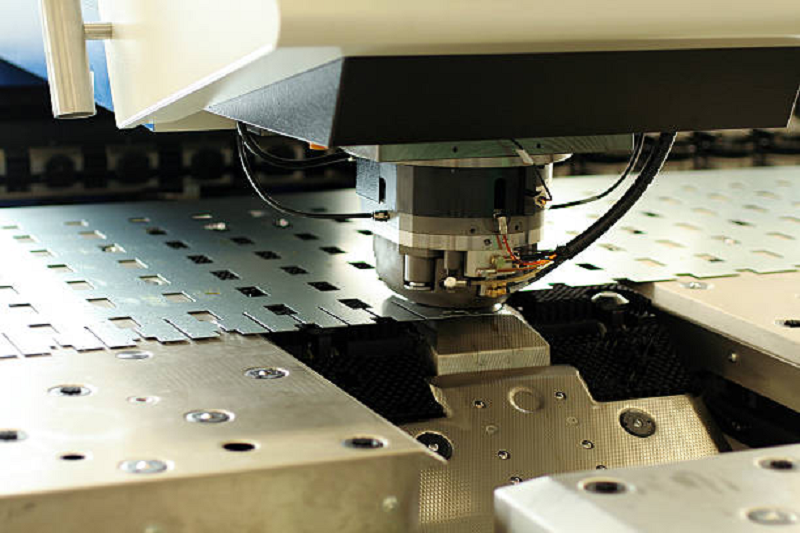
Precision metal stamping is a specialised manufacturing process that converts flat metal sheets or coils into accurately formed components using advanced presses and custom-designed dies. This is done either through one or through a series of operations based on the geometry, thickness, and even functional requirements of the component.
The strength of precision stamping lies in its ability to produce high volumes of identical parts while maintaining dimensional consistency and superior surface finish. Metal stamping manufacturing is the best in a large industrial production because it is repeatable, economical, and the turnaround time is shorter than other methods of fabrication.
Why Precision Metal Stamping Is Preferred?
The demand for precision stamping continues to grow due to its ability to deliver large volumes of identical parts with minimal variation. Metal stamping manufacturing has higher accuracy, quicker turnaround times and efficient usage of materials as compared to the rest of the fabrication methods that use metals. This makes precision metal stamping the preferred choice for industries that demand consistency, durability, and tight tolerances.
Eigen Engineering is about integrating automation, process management, and quality inspection in order to guarantee that all stamped parts are in line with the global manufacturing standards.
Advanced Capabilities at Eigen Engineering
Eigen Engineering has state-of-the-art machinery, presses with high capacity, a modern tooling system and an experienced engineering staff. Our precision metal stamping facilities support a wide range of capacity requirements, enabling us to manufacture components ranging from simple brackets to highly complex, multi-stage parts.
By combining engineering expertise with advanced automation, Eigen Engineering ensures that every precision metal stamping project meets stringent quality, performance, and durability standards. Our focus on innovation and continuous improvement positions us among the leading precision metal stamping manufacturers serving domestic and global markets.
Materials Used in Precision Metal Stamping
The type of material is very important in defining stamping force, tooling and ultimate component performance. Precision metal stamping commonly uses the following materials:
- Precious Metals: Gold, silver, and platinum find applications in specialised electrical and electronic applications where they are needed as conductors and also to resist corrosion.
- Ferrous Metals: The strength, affordability and durability of stainless steel and other alloys of iron make these alloys very popular.
- Non-Ferrous Metals: Brass, bronze and Zinc are usually used due to their high formability and resistance to corrosion.
- Speciality Metals: High-end performance applications, such as their uses in strength, heat resistance, and reliability, are made of titanium and nickel alloys.
Eigen Engineering supports a wide range of materials to meet both standard and custom precision stamping requirements.
Key Processes in Precision Stamping
Precision metal stamping is a combination of multiple forming and cutting operations. As per the component design, the process can involve:
- CAD/CAM Design: The design and simulation of CAD are digital, so that after it is designed, there is no mistake in the final production.
- Striking: Makes holes and holes through material in the most precise and rapid way.
- Blanking: Takes the necessary element out of the sheet of parent metal.
- Bending and Flanging: This involves moulding metal in specific angles out of determination of structural integrity.
- Coining: Pressure is put on a high amount in order to create sharp details and smooth finishes.
- Drawing: Bends metal into more profound or finer forms.
- Embossing: It is used to create elevated or depressed patterns either functionally or aesthetically.
- Shearing and Trimming: Makes sure edges are clean and excess content is removed.
The stages are strictly regulated at Eigen Engineering to ensure that there is accuracy and consistency in the manufacturing of metal stamping.
Ensuring High-Quality Precision Metal Stamping
High quality stamped components cannot be made by merely sophisticated machinery. Eigen Engineering is a disciplined and methodical company:
- Planning and Design: It involves the development of custom tooling and prototypes according to needs, based on the application requirements.
- Die Preparation: Dies are designed to be very precise using precision engineering so that they repeat and can last a long time.
- Cutting and Forming: This is a series of operations carried out under controlled circumstances.
- Quality Inspection: Each of the components is checked strictly in order to meet the requirements of dimensions and functions.
This approach ensures that every precision metal stamping solution delivers reliability and performance.
Benefits of Precision Metal Stamping
The widespread adoption of precision metal stamping across industries is driven by several key advantages:
- Large mass production and fast selling.
- Durability of tooling, which results in long-term cost efficiency.
- Eliminated secondary processing and waste of materials.
- Excellence in quality by automated production systems of metal stamping.
- Uninterrupted good quality in bulk production.
These benefits make precision metal stamping an indispensable process for manufacturers seeking scalability and precision.
Applications Across Industries
Eigen Engineering’s precision metal stamping solutions support a wide range of industrial sectors:
- Automotive: Brackets, terminals, connectors, shields and structural elements.
- Aerospace: piano fittings, fasteners, clips, washers, and components of safety-critical design.
- Medical Equipment: Accurate parts of medical equipment and Greek parts of medical equipment, implants and diagnostic equipment.
- Electronics: Circuit breakers, fuses, connectors, and components for transferring energy.
- Renewable Energy: solar panel frames, solar panel envelopes, solar panel wires, and solar panel inverters.
- Appliances: Building and working structures of household and industrial appliances.
- Specialities Components: The parts that use intricate geometries and small tolerances, and are highly customised.
Each application benefits from the consistency and accuracy delivered through precision stamping.
Reasons Why Eigen Engineering is a Good Choice?
As a trusted name among precision metal stamping manufacturers, Eigen Engineering combines technical expertise, certified quality systems, and customer-centric solutions. Our single-certified facilities are a demonstration of our desire to provide high reliability in metal stamping manufacturing services according to global standards.
We collaborate closely with clients to develop customised precision metal stamping solutions that enhance product performance, reduce costs, and support long-term business growth. Regardless of whether the need is in terms of standard parts or parts required in an application, Eigen Engineering provides better results that are beyond expectations.
In Conclusion, Precision metal stamping remains a cornerstone of modern manufacturing, enabling industries to achieve accuracy, efficiency, and scalability. With advanced infrastructure, skilled professionals, and a strong focus on quality, Eigen Engineering stands out as a reliable partner for precision stamping and custom metal stamping manufacturing solutions. Opting to use Eigen Engineering, the business obtains the ability to drive accuracy and efficiency in innovation and functionality across sectors.




Leave a Reply