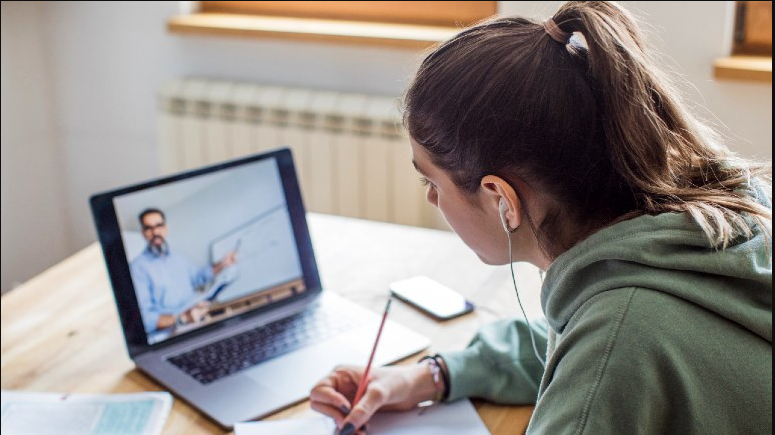
For more than a century, the American educational system has operated on a remarkably consistent blueprint: age-based grade levels, standardized curricula, fixed school hours, and a physical classroom led by a single teacher. This model, designed during the Industrial Revolution to prepare students for factory-era workplaces, has proven remarkably durable. Yet beneath this surface of stability, a profound transformation is accelerating. Across the country, alternative schools and flexible learning models are not merely supplementing traditional education—they are fundamentally reimagining it. From micro-schools and hybrid homeschools to competency-based programs and career-integrated academies, these innovations are responding to a central truth: the one-size-fits-all model cannot serve the diverse needs, interests, and circumstances of twenty-first-century learners.
This growth is not happening in isolation. It is fueled by converging forces: widespread dissatisfaction with standardized testing culture, increased awareness of student mental health crises, the democratization of high-quality digital learning resources, and post-pandemic recognition that learning is not bound to physical buildings or rigid schedules. Parents, educators, and policymakers are increasingly asking not whether students are complying with seat-time requirements, but whether they are actually learning and developing the competencies that matter for meaningful lives and careers. Flexible education models are emerging as compelling answers to these questions.
The Spectrum of Alternative Education: Beyond Binary Choices
The term “alternative school” once conjured narrow images: continuation high schools for students who had struggled in traditional settings, or progressive private schools serving affluent families. Today’s landscape defies such simplistic categorization. We are witnessing the emergence of a diverse ecosystem of educational options that exist along multiple continua—from fully physical to fully virtual, from highly structured to completely learner-directed, from general education to career-specialized.
Micro-schools represent one rapidly growing segment. These intentionally small learning environments, often serving fewer than fifty students, combine the personalized attention of one-room schoolhouses with contemporary curriculum and technology. Networks like Acton Academy and Wildflower Schools have demonstrated that small, community-anchored schools can deliver academic outcomes comparable to or exceeding traditional institutions while fostering greater student agency and engagement.
Hybrid homeschools, sometimes called university-model schools, offer structured in-person instruction two or three days weekly while students learn independently under parent guidance on remaining days. This model appeals to families seeking both the flexibility of home education and the socialization, specialized instruction, and accountability of institutional schooling. The National Hybrid Schools Survey indicates these programs have grown over 300 percent in the past decade, serving families across socioeconomic spectra.
Competency-based education (CBE) programs reject the Carnegie unit—the century-old practice of awarding credit based on instructional hours—in favor of demonstrated mastery. Students in CBE environments progress upon proving they have learned, not when the calendar dictates. This model has gained particular traction at the secondary level through networks like Mastery Transcript Consortium and within statewide initiatives in New Hampshire, Maine, and Colorado. Research from the Aurora Institute demonstrates that CBE students, particularly those who entered behind grade level, close achievement gaps faster than peers in time-based systems.
Career-connected academies such as P-TECH and CareerWise Colorado integrate high school, college, and workplace learning into seamless pathways. Students simultaneously earn diplomas, associate degrees, and industry certifications while accumulating paid work experience. These models recognize that for many students, abstract academic content becomes meaningful when connected to concrete professional applications.
The proliferation of these diverse models creates unprecedented choice, but also significant complexity. Families navigating this landscape must evaluate programs against their child’s unique needs while managing the logistical demands that alternative schedules sometimes create. For students transitioning between traditional and alternative settings, or those supplementing flexible models with specific credit requirements, targeted academic support can ensure continuity. This is particularly relevant for families who have chosen intensive project-based or career-integrated programs that may not align perfectly with traditional assessment calendars. In these circumstances, legit online class help for students provides a reliable bridge, enabling learners to meet specific course requirements while fully engaging with their primary alternative learning environments.
Drivers of the Alternative Education Movement
Understanding why alternative models are proliferating requires examining the limitations of traditional schooling that have become increasingly untenable.
The mental health crisis among adolescents has reached alarming proportions. CDC data indicates that more than 40 percent of high school students report persistent feelings of sadness or hopelessness, with rates significantly higher among LGBTQ+ and female students. The competitive pressure, social comparison, and sleep deprivation associated with traditional high school schedules contribute substantially to this epidemic. Alternative models offering later start times, reduced homework loads, and less frequent high-stakes testing report measurably lower student anxiety and depression rates.
Disengagement and boredom represent equally urgent problems. The Gallup Student Poll has consistently found that student engagement declines precipitously from elementary through high school, with fewer than half of high school juniors reporting they are engaged in their coursework. Students describe school as irrelevant, passive, and disconnected from their lives and aspirations. Alternative models emphasizing project-based learning, real-world applications, and student choice in topic and format demonstrate significantly higher engagement metrics.
Economic and technological transformation has altered what successful preparation for adulthood requires. The twentieth-century economy demanded workers who could follow instructions reliably. The twenty-first-century economy rewards creative problem-solving, collaboration across difference, adaptability, and self-direction—competencies that traditional compliance-oriented schools often inadvertently suppress. Alternative models centered on design thinking, entrepreneurial projects, and interdisciplinary inquiry align more closely with these emerging demands.
The COVID-19 pandemic served as both accelerant and proof of concept. When millions of families experienced learning outside traditional school structures, many discovered that their children could thrive without bells, rigid pacing, or constant adult supervision. This firsthand experience fundamentally shifted parental expectations. Surveys conducted by EdChoice indicate that parent satisfaction with fully remote and hybrid learning during the pandemic increased willingness to consider permanent alternatives by nearly 40 percentage points.
Challenges and Criticisms: A Balanced Examination
The growth of alternative education has not proceeded without legitimate concerns that warrant serious consideration.
Equity and access remain the most significant challenge. Many innovative models, particularly micro-schools and hybrid programs, require substantial parental involvement—both time and educational capacity—that not all families possess. Others, despite stated commitments to accessibility, serve predominantly affluent populations. If alternative education becomes primarily available to families with resources while traditional systems serve everyone else, we risk creating a two-tiered system that exacerbates rather than reduces opportunity gaps.
Accountability and quality assurance present ongoing tensions. Alternative models often resist standardized testing and prescriptive state regulations, arguing they measure the wrong things. Yet without common metrics, evaluating whether these programs actually deliver superior outcomes becomes difficult. The most credible alternative networks have addressed this through transparent longitudinal reporting and third-party validation.
Scalability versus fidelity creates persistent tension. Models that flourish as small, founder-led schools often struggle to maintain their distinctive culture and practices when expanding. The challenge of training enough educators comfortable with facilitator-as-coach rather than lecturer roles constrains growth.
The Future: Blending Rather Than Replacing
We believe the most likely trajectory is not wholesale replacement of traditional schooling but integration and hybridization. Traditional districts increasingly incorporate alternative model elements: competency-based progress, flexible scheduling, early college access, and project-based learning pathways. Simultaneously, alternative providers recognize that some aspects of traditional schooling—consistent community, reliable schedules for working parents, structured exposure to diverse perspectives—remain valuable.
This convergence suggests a future where the distinction between “traditional” and “alternative” blurs. Schools will offer multiple models within single institutions, enabling students to choose learning formats aligned with their needs for different subjects and different developmental stages. A student might learn mathematics through self-paced competency-based software, participate in Socratic seminars for humanities, engage in community-based scientific research, and complete career-technical certifications at a regional center—all under the umbrella of a single public school system.
The New Normal of Educational Diversity
The growth of alternative schools and flexible models reflects not a rejection of education’s purposes but a deeper commitment to them. We have not abandoned the goal of preparing young people for fulfilling lives and meaningful contributions; we have simply recognized that there are multiple paths to this destination. The factory model served an era when compliance and standardization were paramount. The emerging ecosystem of diverse educational options serves an era when creativity, adaptability, and self-knowledge are the highest goods.
This diversity is itself an educational benefit. Students who experience choice in how they learn, who must evaluate options and make decisions about their educational pathways, develop precisely the agency and metacognition that predict lifelong success. The existence of viable alternatives also pressures traditional systems to improve, to articulate their distinctive value propositions, and to respond to families as respected partners rather than captive audiences.
The question is no longer whether alternative education will continue growing. It is whether we will ensure that growth expands opportunity rather than concentrating it, whether innovation will reach the students most poorly served by existing arrangements, and whether we can build systems flexible enough to accommodate diverse approaches while maintaining shared commitment to excellence and equity. The answer depends on the choices we make now






Leave a Reply