Anxiety can make small things feel big and simple days feel heavy. The good news is that anxiety is not a life sentence. There are clear, proven ways to manage it, and one of the most helpful tools is learning how your thoughts, feelings, and actions work together. In this guide, you’ll learn how to use practical mental tools to calm anxious thoughts, feel more in control, and respond to fear in healthier ways. Everything here is simple, friendly, and made to help you take real steps forward.
Anxiety often feels confusing at first. Your heart races, your mind jumps to worst-case thoughts, and your body reacts before you can think. This guide will help you slow that process down and understand what is really happening. When you understand anxiety, it becomes easier to manage it instead of feeling trapped by it.
Understanding Anxiety in Simple Terms
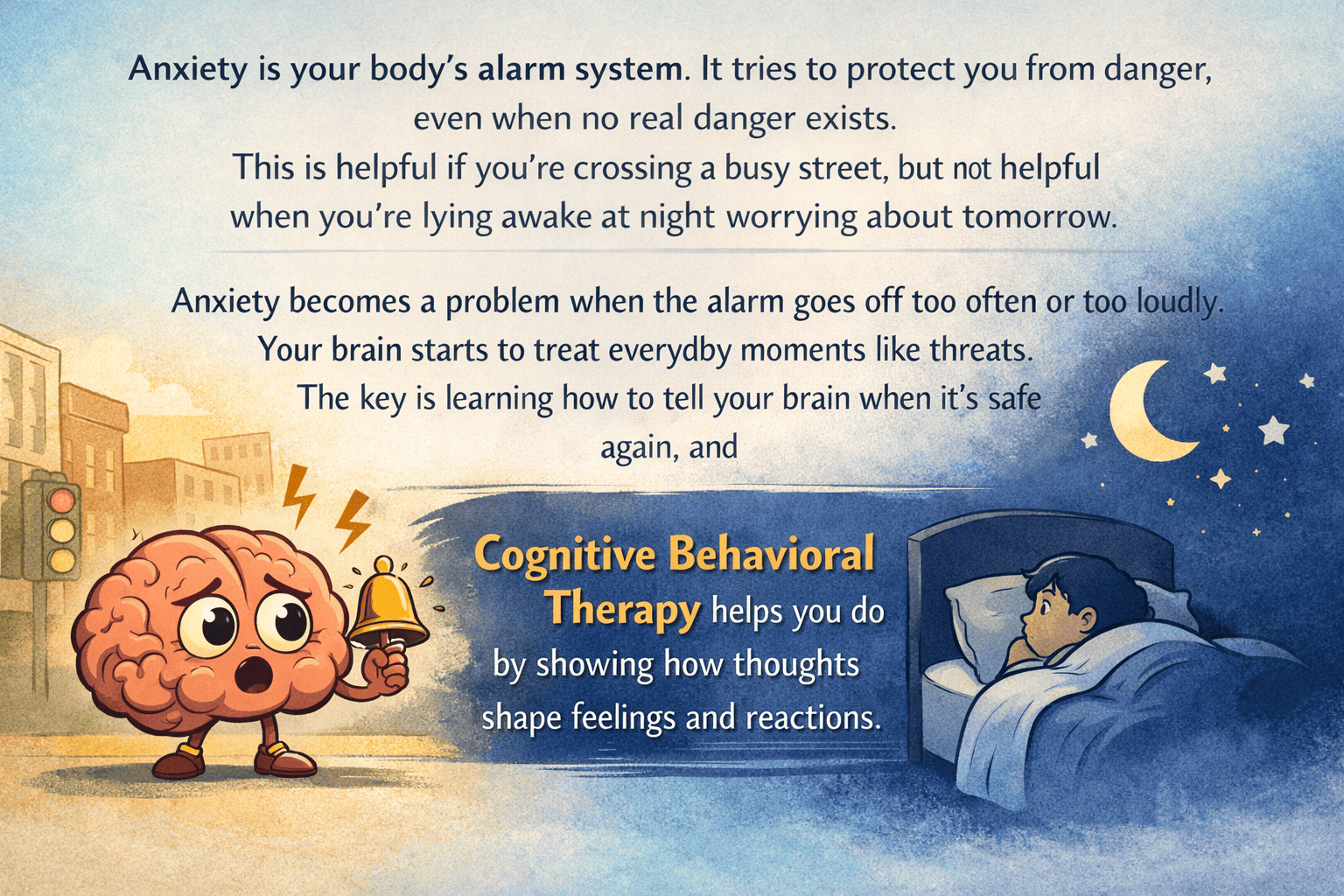
Anxiety is your body’s alarm system. It tries to protect you from danger, even when no real danger exists. This is helpful if you’re crossing a busy street, but not helpful when you’re lying awake at night worrying about tomorrow.
Anxiety becomes a problem when the alarm goes off too often or too loudly. Your brain starts to treat everyday moments like threats. The key is learning how to tell your brain when it’s safe again, and this is exactly what Cognitive Behavioral Therapy helps you do by showing how thoughts shape feelings and reactions.
How Thoughts Shape Anxiety
Every anxious feeling starts with a thought. Sometimes you notice the thought. Other times it flashes by so fast you only feel the fear.
For example:
What if something bad happens?
I can’t handle this.
Everyone will judge me.
These thoughts feel real, but they are often guesses, not facts. When you believe them without checking, your body reacts with fear.
Learning to slow down and examine these thoughts is a core part of Cognitive Behavioral Therapy, and it’s one of the most effective ways to reduce anxiety over time.
Step One: Notice Your Anxious Thoughts
You can’t change a thought you don’t notice. The first step is simply paying attention.
When anxiety shows up, pause and ask:
What am I thinking right now?
What am I afraid will happen?
You don’t need to judge the thought or fight it. Just notice it. This small pause creates space between you and the fear.
Think of it like watching clouds move across the sky. You see them, but you don’t chase them.
Step Two: Question the Thought Gently
Once you notice the thought, ask gentle questions:
Is this thought a fact or a fear?
Have I handled something like this before?
What is another possible outcome?
You are not trying to force positive thinking. You are looking for balance and truth.
Anxiety often speaks in extremes. Your job is to bring the volume down by introducing reason and kindness.
Step Three: Replace Fear With a Fair Thought
After questioning a thought, try replacing it with something more fair and calming.
For example:
Instead of “I will fail,” try “I may feel uncomfortable, but I can try.”
Instead of “Something terrible will happen,” try “I don’t know what will happen, and I can handle it.”
These new thoughts feel quieter, but they help your body relax. Over time, your brain learns safer patterns.
Step Four: Change Small Behaviors
Anxiety doesn’t only live in thoughts. It also lives in actions.
Common anxious behaviors include:
Avoiding situations
Seeking constant reassurance
Over-preparing
Escaping discomfort quickly
Try making small changes instead of big leaps. If you avoid something, take one tiny step toward it. If you seek reassurance, delay it for a few minutes.
Each small action teaches your brain that you are safe and capable.
Facing Fear Slowly and Safely
Avoidance makes anxiety stronger. Facing fear slowly helps it shrink.
Start with the least scary version of the situation. Stay there until your fear drops even a little. Then try again another day.
This process helps your brain learn a new message: “I can handle this.”
Courage isn’t about being fearless. It’s about staying present even when fear shows up.
Using Your Body to Calm Your Mind
Your body and mind are deeply connected. When your body relaxes, your mind often follows.
Simple tools include:
Slow breathing
Stretching
Walking
Grounding exercises
Try breathing in slowly through your nose and out through your mouth. Longer exhales send a calm signal to your nervous system.
These tools don’t remove anxiety instantly, but they reduce its intensity.
Building a Daily Anxiety Routine
Consistency matters more than perfection. Small daily habits make anxiety easier to manage over time.
Helpful daily habits include:
Writing down anxious thoughts
Practicing calm breathing
Moving your body
Getting enough rest
Think of anxiety care like brushing your teeth. You do it regularly to prevent bigger problems later.
Being Kind to Yourself During Anxiety
Anxiety often comes with self-criticism. You may think you’re weak or broken. This is not true.
Anxiety is a learned response, and learned responses can be unlearned.
Talk to yourself like you would talk to a friend. Encouragement helps healing move faster.
Progress is not always straight. Some days are harder. That does not erase your growth.
When to Seek Extra Support
Sometimes anxiety feels too heavy to handle alone. That is okay.
Professional support can help guide you through these tools and personalize them for your life. Getting help is not a failure. It is a strong step toward healing.
Support can speed up progress and help you feel less alone in the process.
Final Thoughts
Anxiety may feel powerful, but it is not in control forever. When you learn to notice your thoughts, question fear, and respond with calm actions, anxiety loses its grip. Each small step you take builds confidence and peace over time. You don’t need to be perfect. You just need to keep going.
If you’re looking to learn more about anxiety care and practical mental health tools, Zenith Mental Health offers helpful resources and support at zenithmhc.com.
FAQs
How long does it take to see results using these techniques?
Many people notice small changes within a few weeks. Bigger changes often come with regular practice over time.
Can children use these anxiety tools?
Yes. These ideas use simple thinking and gentle steps that work well for both children and adults.
What if my anxious thoughts feel too strong to challenge?
Start small. Even noticing the thought without changing it is progress. Support from a professional can also help.





Leave a Reply