Grief can feel confusing, heavy, and never-ending, especially when it does not ease with time. Many people wonder why their pain feels stuck while others seem to heal. This guide explains how complicated grief works, what treatment programs offer, and how to choose the right path forward so healing feels possible again.
Grief is a natural response to loss, but sometimes it becomes overwhelming and hard to manage alone. When sadness, anger, or longing stay intense for months or years, daily life can feel impossible. Learning how treatment programs help can bring clarity and hope when everything feels uncertain.
Complicated grief is not a weakness or a failure to cope. It is a real condition that affects the brain, emotions, and body. People experiencing it may feel frozen in time, unable to move forward while still deeply tied to their loss. Understanding this is the first step toward healing.
Many people delay getting help because they think grief should simply pass. This belief can increase pain and isolation. Treatment programs exist to support people who need structured guidance, not quick fixes, to process their loss safely.
Understanding Complicated Grief
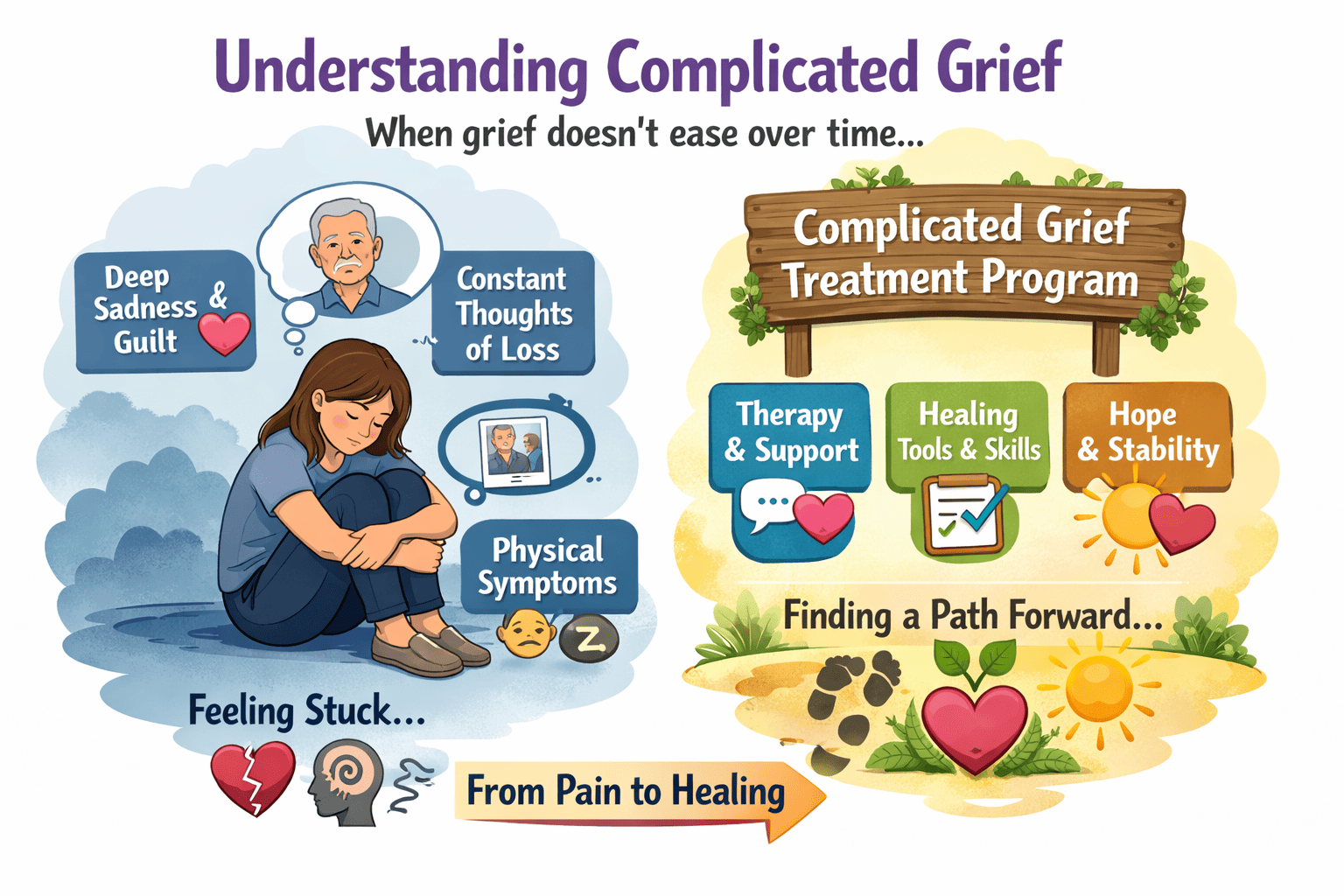
Complicated grief happens when natural mourning does not ease over time. Instead of slowly healing, emotions remain sharp and intense, which is why many people benefit from a Complicated Grief Treatment Program. People may feel deep sadness, guilt, anger, or numbness that interrupts daily life.
Unlike depression, complicated grief focuses strongly on the loss itself. Thoughts often circle around the person who died or the event that caused the loss. This constant mental loop can drain energy and block joy.
Physical symptoms are also common. Trouble sleeping, fatigue, headaches, and body aches may appear. These signs are real and deserve care, not dismissal.
Recognizing complicated grief early helps prevent long-term emotional strain. The sooner support begins, the easier it becomes to rebuild stability and hope.
When Grief Needs Extra Support
Grief becomes complicated when it interferes with basic living. If working, socializing, or caring for yourself feels impossible for long periods, it may be time to seek help.
People may avoid reminders of the loss or, on the other hand, cling tightly to memories and belongings. Both patterns can keep grief from healing naturally.
Strong feelings of guilt or blame often appear, even when there was no control over the loss. These thoughts can grow heavier without guidance.
Treatment programs help break these cycles gently, offering tools to face grief without feeling overwhelmed.
What Treatment Programs Are Designed to Do
Treatment programs create a safe space to process grief step by step. They are not about forgetting or “moving on.” They focus on learning how to live fully while honoring the loss.
Programs often combine emotional support, practical skills, and education. This balanced approach helps people understand their feelings and learn ways to cope day by day.
A structured program provides consistency. Regular sessions help build trust, safety, and progress over time.
For many people, joining a Complicated Grief Treatment Program can feel like finally having a clear path instead of guessing what to do next.
Common Types of Treatment Approaches
Most programs include talk therapy as a core part. Talking openly helps release emotions that may have been locked inside for a long time.
Some programs use grief-focused cognitive therapy. This helps people notice harmful thought patterns and gently replace them with healthier ones.
Group therapy may also be offered. Sharing experiences with others can reduce loneliness and remind people they are not alone in their pain.
Mind-body practices, like breathing exercises or gentle movement, are sometimes included to calm the nervous system and support emotional balance.
How Programs Are Structured
Treatment programs vary in length and format. Some last a few weeks, while others continue for several months, depending on individual needs.
Sessions may happen weekly or multiple times per week. Consistency helps create emotional safety and steady progress.
Some programs are outpatient, allowing people to live at home while attending sessions. Others offer more intensive support for those who need it.
Understanding the structure ahead of time helps people feel prepared and less anxious about starting.
Choosing the Right Program for You
Finding the right program starts with understanding your needs. Consider how intense your grief feels and how much support you need.
Look for programs that specialize in complicated grief, not just general counseling. Specialized care ensures the approach fits your experience.
Ask about the treatment methods used and whether they align with your comfort level. Feeling safe and respected is essential for healing.
Trust your instincts. A program should feel supportive, not rushed or overwhelming.
What Progress Can Look Like
Healing does not mean grief disappears. Progress often shows up as small changes, like sleeping better or feeling moments of peace.
People may begin to enjoy activities again without guilt. This is a sign of healing, not forgetting.
Thoughts about the loss may become less intrusive. Memories can feel softer and less painful over time.
Each step forward matters, even when progress feels slow.
Challenges Along the Way
Grief work can feel uncomfortable at times. Facing painful emotions is not easy, but it is part of healing.
Some days may feel heavier than others. This does not mean treatment is failing.
Support programs help people learn how to handle these waves without giving up.
Having patience with yourself is one of the most important parts of the process.
The Role of Support Outside Treatment
Healing is stronger with support beyond therapy sessions. Friends, family, or trusted people can provide comfort and connection.
Setting gentle boundaries is also important. It is okay to protect your energy while healing.
Simple routines, like regular meals and rest, support emotional recovery.
Programs often help people build a support system that lasts beyond treatment.
Life After Treatment
Many people worry about what happens after a program ends. Good programs prepare people for this transition.
Skills learned during treatment help manage grief long-term. These tools remain useful for future challenges.
Life may feel more balanced, even if sadness still appears at times.
Healing means learning to carry grief differently, not letting it control life.
Taking the First Step
Starting treatment can feel scary, but it is also a brave act of self-care.
Asking for help does not mean weakness. It means recognizing your needs.
Clear guidance and compassionate support can make healing feel possible again.
The first step often brings relief simply by knowing you are not alone anymore.
Final Thoughts
Navigating complicated grief can feel overwhelming, but support exists. Treatment programs offer structure, safety, and understanding when grief feels stuck.
Healing happens gradually through care, patience, and the right guidance.
If grief has been holding your life still, learning about treatment options can open the door to hope and forward movement.
Support that truly understands grief can change everything.
For additional mental health resources and compassionate care options, you may explore New View Wellness at newviewmh.com.
FAQs
How long does complicated grief usually last without treatment?
Complicated grief can last for years without support. Treatment helps shorten suffering and improve daily functioning.
Can children or teens experience complicated grief?
Yes. Children and teens can also struggle with complicated grief and may need age-appropriate support.
Is feeling better a sign of forgetting the person who was lost?
No. Healing means learning to live fully while still honoring and remembering the person.





Leave a Reply