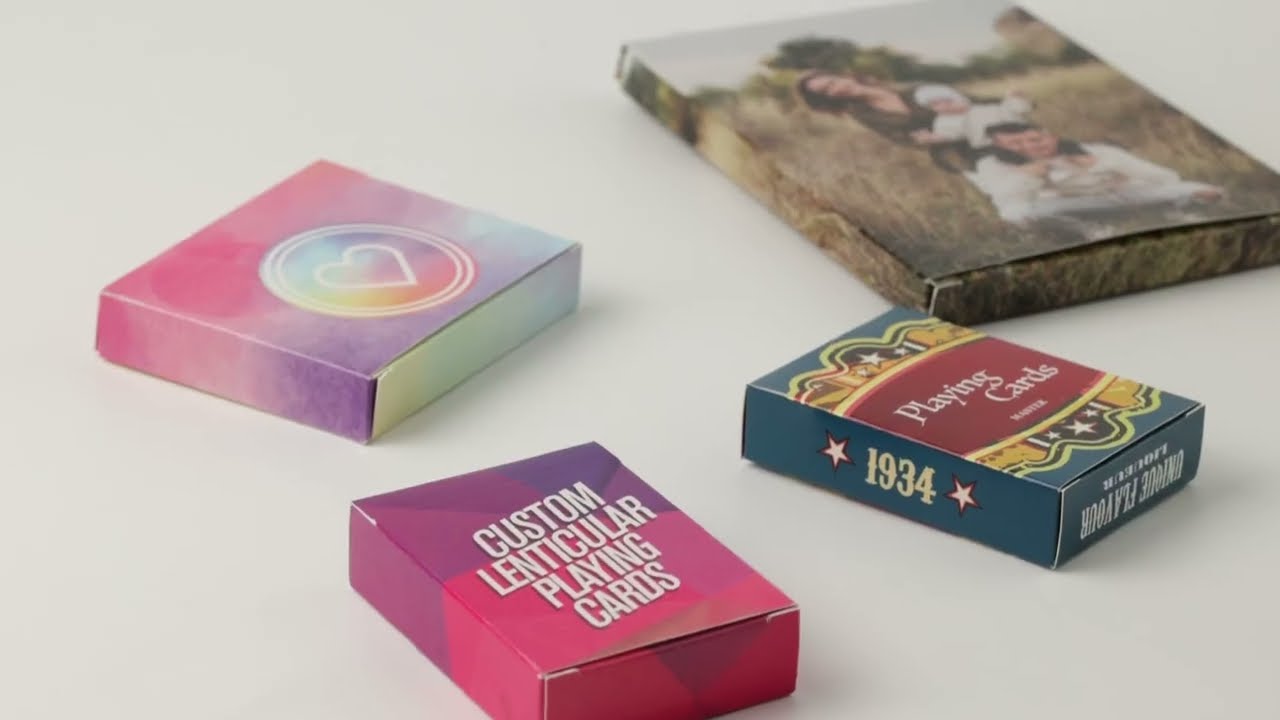
Custom playing card boxes have ceased to be mere cardboard packaging to become an important part of branding, functionality and appearance. The smallest details, including the choice of materials, print finishes, etc., contribute to the creation of the high-end product experience. Companies and collectors should have the context of the complicated design operations, which result in the creation of these boxes, to enable their decks to shine.
Whether it is playing card boxes made out of cardboard playing cards or playing card boxes that are made out of personalized playing cards, each decision has an effect on perception, usability, and cost. This paper will discuss the complex process of creating custom boxes to package playing cards that create a lasting impact.
Structural Design Concerns
Custom playing card boxes should be designed in a way that helps to combine both realism and aesthetics. It has choices of tuck boxes through two piece rigid boxes. The handling of the dimension is done to ensure that the cards fit in snugly yet can be removed easily. The slides can be provided with internal inserts to avoid sliding and improve presentation. The complexity and cost of manufacturing are also determined by the structural design, most notably with custom playing card boxes wholesale. The final product is not only made to look good to the eye of the customer, but also made to be able to handle repeated use without suffering.
Graphic Layout Planning
Graphic layout is one of the key factors of custom-printed playing card boxes. The designers sketch out artworks, logos, and typography relative to the size of the boxes. An efficient layout provides uniformity of visual elements that are readable when the box is put together. High-resolution graphics are required to prevent pixelation, whereas colour schemes are tested regarding print fidelity. The given stage is usually accompanied by some reiterations, making sure that every element of the design is consistent with the identity of the brand and the requirements of the audience, particularly in the case of custom playing card boxes with a logo attached.
Overview of Printing Techniques
Printing methods are very critical in the visual and tactile content of personalized playing card boxes. The most common ones are the offset, digital, and UV printing that have various advantages. Offset printing has been used to guarantee a sharp colour reproduction of large orders, whereas digital printing allows flexibility in small runs or custom decks. Foil stamping or UV coating would add shine and elegance, which would increase perceived value. Selecting the appropriate printing technique will guarantee the end box will be of the rightful standards both aesthetically and functionally, without jeopardizing its longevity.
Finish Touch Enhancements
Playing card packaging boxes are customized and brought to life by finishing touches. Embossing, debossing, spot UV, foil stamping, etc. Give the images depth, texture and interest. Gloss or matte laminations also provide a different feel as well as covering printing surfaces. All these facts make a simple cardboard box a high-end product. Finishing: It is like finishing with which can make the generic deck a one-off playing card box, which can attract the collector or corporate customer.
Branding Integration Techniques
Specialized playing card boxes are very potent branding mechanisms when incorporated intelligently. Brand identity is supported by logos, slogans and colour palettes at all touchpoints. The custom playing card boxes are suited for businesses in wholesale or no minimum quantities to display corporate logos, marketing messages or thematic designs. These integrations not only convey professionalism, but it also helps in building consumer loyalty. The strategic positioning will make branding components visible but not obtrusive in all of the customized playing card boxes.
Quality Control Procedures
The quality should be kept uniform in the manufacturing of personalized playing card boxes. Quality control checks are highly effective and are performed to make sure that the printing was done correctly, assembly was accurate, and performance was not disrupted. Checking of folds, adhesion, and alignment avoids faults which may damage the brand perception. Wholesale orders are usually tested in bulk to ascertain consistency. Quality control is not limited to the aesthetics, but makes sure that the boxes are tough, easy to open and protective and in the end, good enough to protect the reputation of any company that uses printed playing card boxes.
Scaling Problems in Production
The process of scaling the production of custom playing card boxes should be planned. The limited volumes might be better suited to small-scale digital printing, whereas high-volume orders would be better served through the offset technique to be economical and efficient. Timing, supply chain management and availability of materials should go together to avoid delays. Scaling is efficient so that the quality of products is uniform throughout, irrespective of the order quantity of the custom playing cards boxes wholesale. By doing so, these challenges can be handled at an early stage of the design process, and all the decks manufactured are of high standards, with toy boxes all the way to finished cards.
Conclusion
Custom playing card boxes are much more than just a package; they are a blend of material science, graphic design, printing skills, and branding strategy into a single process. Since playing cards are made out of cardboard, and personalized playing card boxes with a logo, every process must be meticulously planned and accurate. The intricate design approach makes each set operational, robust and attractive. Knowing about these complexities, companies and hobbyists can design their own playing card packaging boxes that make a difference, enhance their brand and produce an excellent unboxing experience.


Leave a Reply