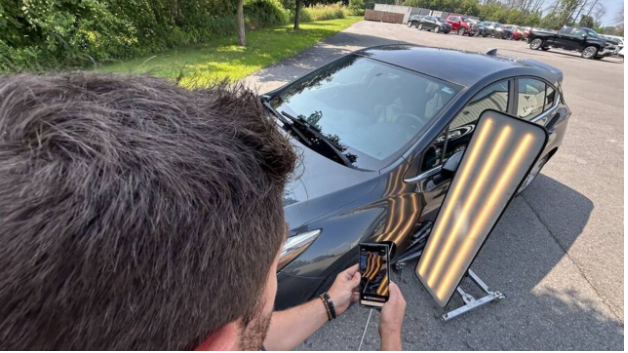
Car dents can be frustrating, especially when they appear after a parking accident, a minor collision, or a sudden hailstorm. Even a small dent can affect your vehicle’s appearance and make you wonder whether expensive bodywork and repainting are necessary. Fortunately, many dents can be repaired without repainting the damaged area. Mobile Paintless dent repair offers a convenient solution for vehicle owners who want to restore their car’s original appearance without the hassle of visiting a traditional auto body shop. Paintless dent repair, commonly known as PDR, is a specialized technique that removes dents while preserving the vehicle’s factory paint. Instead of filling, sanding, and repainting the damaged panel, trained technicians carefully reshape the metal from behind or use specialized tools to correct the dent from the outside. When the damage is suitable, this approach can save time and help maintain the original finish. Another major advantage is convenience. Mobile technicians can travel to your home, workplace, or another suitable location to inspect and repair eligible dents. Understanding how this service works, which dents qualify, and what to expect can help you decide whether it is the right choice for your vehicle.
What Is Mobile Paintless Dent Repair?
Mobile Paintless dent repair is a service that brings professional dent removal directly to the vehicle owner. Rather than transporting a car to a repair facility, customers can arrange for a technician to assess the damage and perform suitable repairs at an agreed location. The process uses specialized tools, lighting, and controlled pressure to restore the damaged metal to its original shape. Technicians may access the back of a panel to gently push out a dent or use glue-pulling techniques to lift the damaged area from the outside. The method depends on the dent’s location, size, depth, and accessibility.
Because PDR does not normally require sanding, body filler, or repainting, it can preserve the original factory finish when the paint remains intact. However, not every dent qualifies for this technique. Deep creases, sharp damage, stretched metal, or chipped paint may require a different repair method. For everyday vehicle damage, mobile service provides a practical way to address minor dents without unnecessary disruption to a busy schedule.
How Does the Paintless Dent Repair Process Work?
1. Inspecting the Damaged Area
The first step is a careful inspection of the dent. A technician examines the damaged panel under specialized lighting to understand the dent’s shape, depth, and location. This helps identify changes in the metal that might not be obvious in ordinary daylight. The technician also checks the paint for cracks, scratches, or chips. Since PDR relies on preserving the existing finish, damaged paint may affect whether the technique is suitable.
For example, a shallow dent on a door caused by another car opening against it may be an excellent candidate. A sharp crease with cracked paint might need conventional body repair instead. After evaluating the damage, the technician explains the recommended approach, estimated repair time, and expected result. Asking questions during this stage helps you understand what is possible before work begins. A professional assessment also reduces the risk of choosing a repair method that cannot deliver the desired outcome.
2. Using Specialized Tools to Restore the Metal
Once the technician confirms that PDR is appropriate, the repair begins. Depending on the vehicle and dent location, the technician may use metal rods, precision tools, or glue-pulling equipment to gradually reshape the affected panel. When access is available behind the dent, controlled pressure is applied to move the metal outward in small increments. For areas that are difficult to reach, adhesive tabs may be attached to the panel to pull the dent outward carefully.
The technician repeatedly checks the surface using specialized lights and reflections. This process helps reveal uneven areas and guides adjustments until the panel looks smooth. Paintless dent repair requires patience, experience, and precision. Applying too much pressure or pulling the metal incorrectly can create additional imperfections. That is why choosing an experienced technician is important for achieving a clean, natural-looking finish.
3. Checking the Final Results
After the dent has been reshaped, the technician inspects the panel from different angles. Reflections and specialized lighting help reveal small distortions that may otherwise be difficult to notice. The goal is to restore the panel’s appearance as closely as possible to its original condition while keeping the factory paint intact. Results depend on the dent’s severity, the type of metal, and whether the panel has previously been repaired.
Before accepting the work, inspect the area in good lighting and ask the technician to explain any remaining imperfections. Some complex dents may not disappear completely, even with professional treatment. A final inspection also provides an opportunity to discuss any concerns and confirm that the repair meets your expectations. Clear communication throughout the process helps ensure a better customer experience.
What Types of Dents Can Mobile PDR Repair?
One of the biggest benefits of Mobile Paintless dent repair is its versatility. It can address several common types of minor vehicle damage, provided the paint is intact and the metal can be reshaped safely.
Common examples include:
- Door dings: Small dents caused by neighboring vehicles in parking lots.
- Hail damage: Multiple shallow dents caused by hailstones striking the vehicle.
- Minor creases: Certain elongated dents that have not excessively stretched the metal.
- Parking dents: Damage caused by light contact with poles, walls, or other objects.
- Small body-panel dents: Minor imperfections on doors, fenders, and other accessible panels.
However, suitability depends on more than dent size alone. A small dent with a sharp center can be harder to repair than a larger, shallow dent. Damage near a panel edge, body line, or reinforced area may also require additional work. If the paint is cracked, the metal is severely stretched, or the panel has significant structural damage, conventional body repair may be necessary. A professional inspection is the most reliable way to determine the appropriate solution.
Benefits of Choosing Mobile Paintless Dent Repair
Convenience is one of the main reasons vehicle owners choose mobile dent removal. Instead of arranging transportation to a repair shop and waiting for the work to be completed, customers can schedule an appointment at a suitable location. Another advantage is the potential to save time. Many straightforward dents can be repaired in a few hours, although complex damage may take longer. Because PDR typically avoids painting and drying time, the vehicle may be ready sooner than it would be after conventional bodywork.
Cost can also be a benefit. When the damage qualifies, avoiding paint, filler, and extensive disassembly may reduce the overall repair expense. The actual price depends on the number of dents, their complexity, and the vehicle’s design. Preserving the factory paint is another important consideration. Original paint can be valuable when maintaining a vehicle’s appearance and resale appeal. Still, outcomes and savings vary, so obtaining an assessment and quote before authorizing the repair is always sensible.
How to Choose a Reliable Mobile Dent Repair Technician
Choosing the right technician can make a significant difference in the quality of the repair. Start by looking for a provider with experience handling the specific type of damage affecting your vehicle. Hail damage, door dings, and dents on complex body lines may require different skills. Review customer feedback and look for genuine before-and-after photographs of completed work. These examples can help you evaluate the technician’s attention to detail, although individual results will vary. It is also wise to request a written estimate that explains the expected cost and scope of work. Ask whether the technician believes the dent can be removed completely or whether some minor imperfections may remain.
Confirm that the technician has suitable tools, appropriate insurance where applicable, and a clear policy for addressing concerns after the repair. The work area should also provide adequate lighting, space, and weather protection when necessary. Finally, avoid choosing a service based on price alone. A careful, experienced professional may deliver better results than someone offering an unusually low quote without properly inspecting the damage.
When Should You Consider Mobile Dent Repair?
The best time to arrange dent repair is usually soon after noticing the damage. Early assessment allows a technician to determine whether the dent is suitable for PDR before additional damage or corrosion becomes a concern. For example, if hail leaves several shallow dents across your vehicle’s hood and roof, a technician can assess whether paintless methods are appropriate. Similarly, a door ding discovered after shopping may be repairable without repainting the entire door. You should seek professional advice promptly if the dent includes cracked paint, exposed metal, sharp edges, or damage close to a sensor or other vehicle component. These situations may need additional inspection or a different repair method.
If the vehicle has experienced a significant collision, do not assume that removing a visible dent resolves the underlying problem. Hidden damage, panel alignment issues, and safety-system concerns should be assessed separately. By arranging a professional evaluation early, you can understand your options and choose a repair method suited to the vehicle’s condition.
Conclusion
Mobile Paintless dent repair provides a convenient way to restore many minor vehicle dents without repainting the affected panels. By using specialized tools and carefully controlled techniques, trained technicians can improve a vehicle’s appearance while preserving its original finish. The service can be particularly useful for door dings, suitable hail damage, and other shallow dents that have not damaged the paint. Its potential benefits include convenience, shorter repair times, and reduced repair costs compared with some traditional methods.
However, the right solution depends on the damage, the panel’s condition, and the technician’s assessment. Before booking a service, request an inspection, discuss your expectations, and obtain a clear estimate. With the right approach, you can make an informed decision and keep your vehicle looking its best without unnecessary repainting.
Frequently Asked Questions
1. How long does mobile paintless dent repair take?
Small, straightforward dents may take less than an hour, while larger or more complex repairs can require several hours or longer. The time depends on the dent’s size, location, accessibility, and overall condition.
2. Can paintless dent repair remove hail damage?
Yes, many shallow hail dents can be repaired using PDR if the paint remains intact and the metal has not been excessively stretched. Vehicles with extensive hail damage may require additional time and a detailed assessment.
3. Is mobile paintless dent repair cheaper than traditional dent repair?
It can be less expensive when the damage qualifies because it generally avoids paint, body filler, and related labor. However, the final cost depends on the complexity and extent of the damage.
4. Will paintless dent repair damage my car’s original paint?
When performed correctly on suitable damage, PDR is designed to preserve the existing paint. However, paint that is already cracked or weakened may not withstand the repair process, so an inspection is important.
5. Can every car dent be repaired without repainting?
No. Deep creases, severely stretched metal, damaged paint, and dents in difficult locations may require conventional bodywork or repainting. A qualified technician can recommend the most suitable repair method.




Leave a Reply