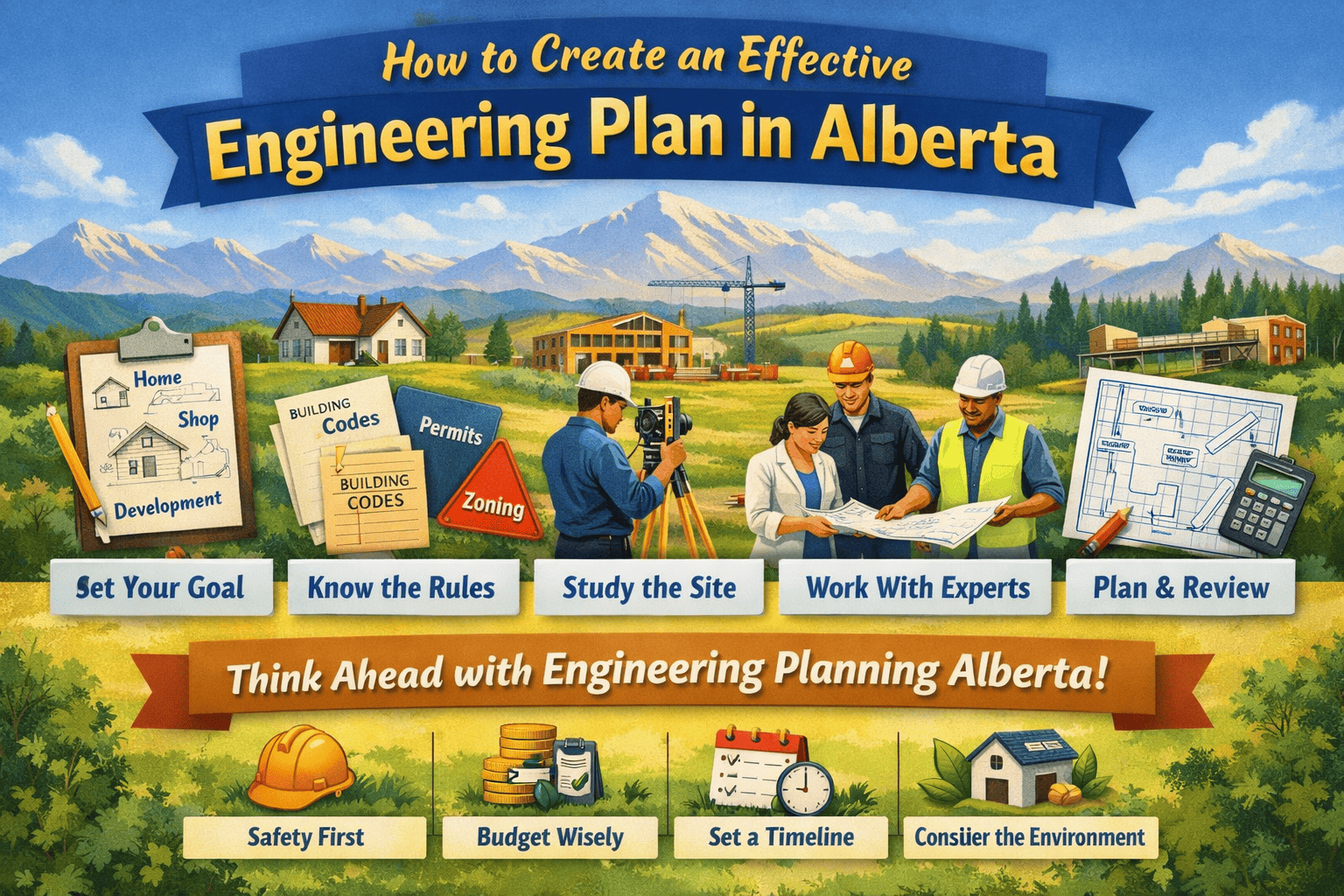
Creating an effective engineering plan in Alberta may sound complex, but it becomes simple when you break it into clear steps. This guide will show you exactly how to move from idea to approved plan without confusion. You will learn how to meet local rules, avoid delays, manage costs, and keep your project safe. If you want a plan that works the first time, keep reading—each step builds on the next.
Start With a Clear Project Goal
Every strong engineering plan begins with one simple question: what are you trying to build or solve? Your goal could be a new home, a commercial space, a renovation, or land development. Write it down in clear words. When your goal is clear, every other choice becomes easier. If the goal is not clear, the plan can quickly fall apart—so take your time here before moving forward with Engineering Planning Alberta in mind.
Understand Alberta’s Rules and Codes
Alberta has strict building codes, safety laws, and municipal bylaws. These rules protect people and the environment. Before drawing your plan, learn what your city or town requires. Zoning rules, environmental rules, and permit needs can change from place to place. Knowing these rules early saves time and money. If you skip this step, you may need to redesign later—and nobody wants that.
Study the Site Carefully
The land itself tells a story. Is the soil stable? Is the land flat or sloped? Are there water lines, gas lines, or power lines nearby? A site study helps you understand risks before they become problems. In Alberta, weather also plays a big role. Snow loads, wind, and frost depth must be considered. A careful site review makes your engineering plan strong from the ground up.
Work With Qualified Professionals
An effective engineering plan is not a one-person job. Engineers, architects, surveyors, and contractors all play a role. In Engineering Planning Alberta, teamwork is key to meeting both safety standards and design goals. Choose licensed professionals who understand local conditions. The right team can spot problems early and suggest smart solutions. A good team saves you stress—and often saves money too.
Create Detailed Drawings and Calculations
Clear drawings are the heart of your plan. They show dimensions, materials, structural systems, and safety features. Engineers also prepare calculations to prove the design is safe. These documents must be accurate and easy to understand. If details are missing, approval may be delayed. Strong drawings tell inspectors and builders exactly what to do, leaving no room for guesswork.
Plan for Safety at Every Stage
Safety should never be an afterthought. Think about worker safety during construction and public safety after completion. Fire exits, load limits, electrical systems, and structural supports must meet code. In Alberta’s climate, snow load calculations are especially important. When safety is built into the plan from the start, your project stands on solid ground.
Budget Smartly From the Beginning
A great plan must also match your budget. Estimate material costs, labor costs, permit fees, and inspection costs. Add a small buffer for unexpected expenses. Prices can change, especially in large projects. If you plan your budget carefully, you avoid sudden financial stress. Smart budgeting keeps your project moving smoothly.
Apply for Permits the Right Way
Before construction begins, you must apply for permits. Submit complete documents with your engineering plan. Incomplete applications often cause delays. Municipal offices in Alberta review plans carefully to ensure safety and compliance. Respond quickly to any requested changes. Fast and clear communication can speed up the approval process.
Think About Environmental Impact
Alberta values environmental responsibility. Your engineering plan should consider drainage, waste management, and energy efficiency. For example, good drainage design prevents flooding. Energy-efficient systems reduce long-term costs and environmental harm. Sustainable planning is not just good for nature—it is also good for your investment.
Prepare a Construction Timeline
Time planning is just as important as design planning. Create a realistic construction schedule. Consider weather delays, especially during Alberta winters. Coordinate suppliers and contractors carefully. A clear timeline helps everyone stay organized. When time is managed well, projects finish faster and with fewer surprises.
Review and Double-Check Everything
Before submitting your final engineering plan, review it carefully. Check measurements, calculations, and material lists. Make sure all professionals have signed where needed. A final review catches small errors that could cause big problems later. This last step may seem simple, but it often makes the biggest difference.
Communicate Clearly With Everyone
Good communication keeps projects strong. Keep open contact with engineers, contractors, inspectors, and stakeholders. Ask questions if something is unclear. Share updates regularly. Clear communication prevents mistakes and builds trust. When everyone understands the plan, the work flows smoothly.
Plan for Future Maintenance
An effective engineering plan does not end when construction is complete. Think about maintenance and long-term performance. Choose materials that last. Plan access points for inspections and repairs. In Alberta’s climate, buildings must handle cold winters and seasonal changes. Planning for the future protects your investment for years to come.
Learn From Past Projects
One of the smartest steps is to learn from others. Review similar projects in Alberta. What worked well? What caused delays? Studying past successes and mistakes gives you valuable insight. Experience is a powerful teacher—even if it comes from someone else’s project.
Keep Documentation Organized
Save all permits, approvals, drawings, and contracts in one place. Organized records make future updates easier. If you sell the property or expand later, clear documentation helps prove compliance. Good records also protect you in case of disputes. Staying organized today prevents confusion tomorrow.
Final Thoughts: Build With Confidence
Creating an effective engineering plan in Alberta does not need to feel overwhelming. Start with a clear goal. Follow local rules. Work with skilled professionals. Plan carefully for safety, budget, time, and the environment. Review everything before construction begins. When each step is done properly, your project has a strong chance of success.
For expert support in structured planning and professional guidance, companies like All Peace Carpentry bring valuable experience to complex projects. To learn more about practical solutions and planning services, visit allpeacecarpentry.com.
FAQs
Why is an engineering plan important in Alberta?
An engineering plan ensures your project follows local laws, meets safety standards, and avoids costly mistakes. It helps you get permits approved and keeps construction organized.
How long does it take to approve an engineering plan in Alberta?
Approval time depends on the project size and location. Small projects may take a few weeks. Larger or complex projects may take several months.
Can I create an engineering plan without hiring professionals?
Small projects may need limited help, but most engineering plans require licensed professionals. They ensure safety, accuracy, and code compliance.





Leave a Reply