Choosing the best residential concrete contractor can feel confusing, but it does not have to be. The right company will protect your home, your money, and your peace of mind. In this guide, you will learn how to compare contractors, what questions to ask, what red flags to avoid, and how to make a smart final choice. By the end, you will feel confident about hiring the best Residential Concrete Services Ontario for your project. Let’s start with what really matters most.
Start With Your Project Goals
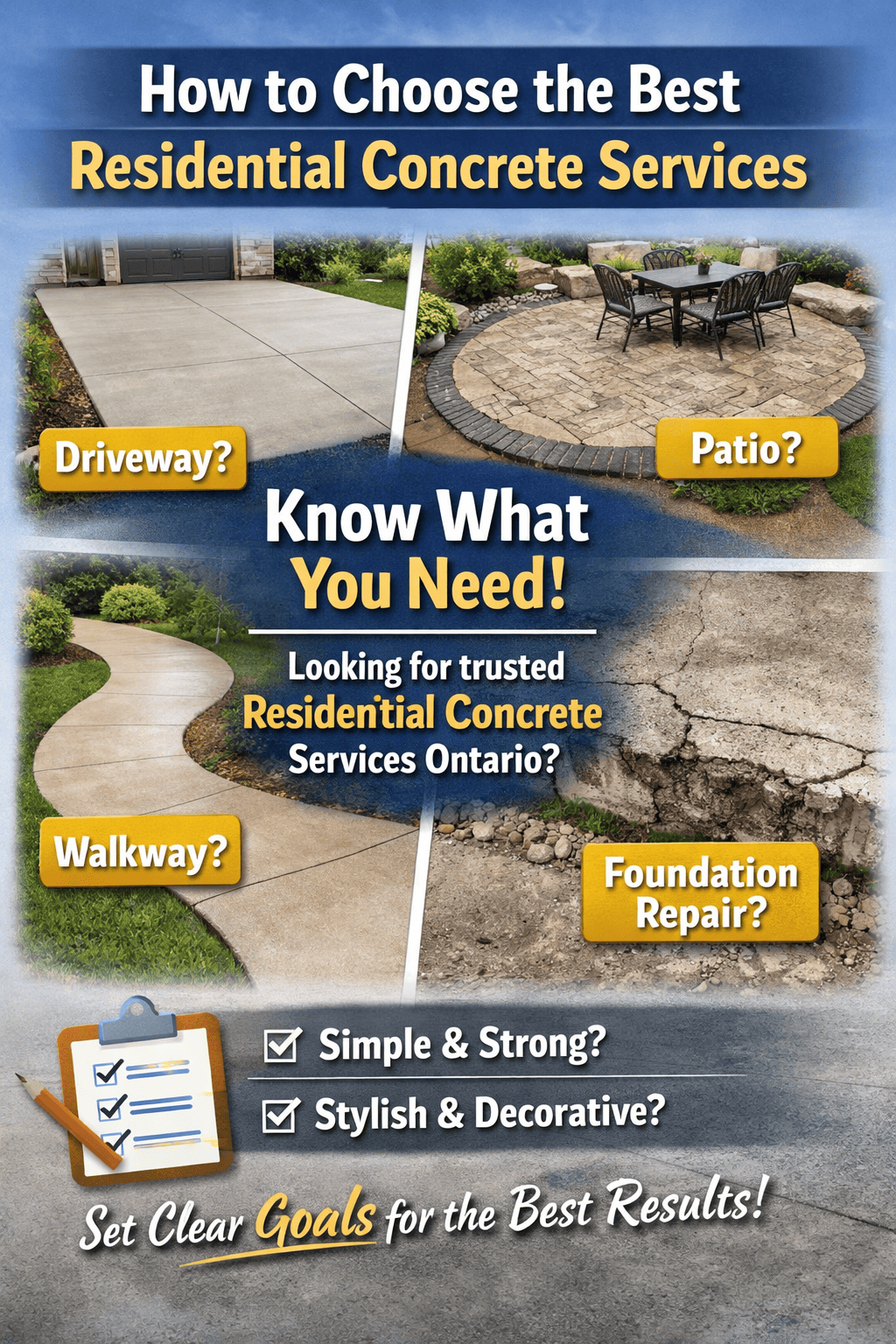
Before you call any contractor, pause and think about your goal. Do you need a new driveway, patio, walkway, or foundation repair? Are you searching for trusted Residential Concrete Services Ontario to handle the job? Are you looking for something simple and strong, or stylish and decorative? When you know exactly what you want, it becomes much easier to choose the right team. Clear goals lead to better results, so take a few minutes to picture the final outcome.
Look for Proven Experience
Experience is not just about years in business. It is about skill, problem-solving, and knowing how to handle surprises. Concrete work can change quickly because of weather, soil, or drainage issues. An experienced contractor will know how to adapt without cutting corners. Ask how long they have worked on residential projects similar to yours. The more familiar they are with your type of project, the smoother it will go.
Check Licenses and Insurance
This step protects you more than you may realize. A licensed contractor follows local rules and building codes. Insurance protects your home if something goes wrong. Without these, you could be responsible for damage or injury. Always ask for proof. A trustworthy company will gladly show you. If they hesitate, that is a warning sign you should not ignore.
Review Past Work Carefully
Photos tell a story. Look at before-and-after pictures of past projects. Pay attention to clean edges, smooth finishes, and even color. Good concrete work should look neat and strong. If possible, ask to see a completed project in person. Seeing real results will give you confidence. Great contractors are proud of their work and happy to share it.
Read Reviews With a Smart Eye
Online reviews can be helpful, but read them carefully. Look for patterns. Do customers talk about clear communication, staying on schedule, and fair pricing? Or do you see complaints about delays and poor cleanup? One bad review may not mean much, but repeated issues are important to notice. Reviews often reveal how a company treats its clients.
Ask About the Process
A good contractor should explain the full process in simple steps. They should talk about site preparation, forming, pouring, curing, and sealing. Proper preparation is the key to long-lasting concrete. If a contractor skips details or rushes explanations, that is not a good sign. When you understand the process, you can feel more secure in your choice.
Understand the Materials Used
Not all concrete is the same. The strength and mix matter. Ask what type of concrete mix they use and why. A quality contractor chooses materials based on your climate and soil conditions. In colder areas, proper air-entrained concrete helps prevent cracking from freeze-thaw cycles. Small details like this can make a big difference over time.
Compare Detailed Written Quotes
Never rely on a verbal price. Always ask for a written quote. It should clearly list materials, labor, timeline, and total cost. This helps you compare companies fairly. Be careful with prices that seem too low. Cheap bids often lead to poor quality or surprise charges later. A clear and honest quote shows professionalism.
Ask About Timeline and Scheduling
Concrete projects depend on weather and careful timing. Ask how long your project will take from start to finish. Will there be delays if it rains? How soon can you use your new driveway or patio? Clear answers show planning and organization. A company that respects your time is more likely to respect your home too.
Notice Communication Style
Good communication builds trust. Does the contractor answer your questions clearly? Do they return calls quickly? Do they explain things in simple words? If communication feels confusing at the start, it may only get worse later. Choose a contractor who listens and responds with patience and care.
Ask About Warranties
Reliable contractors stand behind their work. Ask if they offer a warranty and what it covers. Does it include cracking, surface defects, or workmanship issues? A written warranty shows confidence in quality. It also protects you if something unexpected happens after the project is done.
Evaluate Professionalism
Small details matter. Is the company website clear and helpful? Do they provide contracts and documents on time? Are they polite and respectful? Professional behavior often reflects the quality of work. When a company treats you with respect from the beginning, it is a strong positive sign.
Consider Local Knowledge
Local contractors understand local soil, weather, and building codes. This knowledge helps prevent common problems. For example, drainage issues can damage driveways if not planned correctly. A contractor who knows the area will design solutions that last longer. Local experience brings practical advantages you should not overlook.
Pay Attention to Safety
Concrete work involves heavy tools and machinery. Ask how the team keeps the job site safe. Do they follow safety rules? Do they keep the area organized? Safety practices show responsibility. A safe worksite also protects your family and neighbors during the project.
Look for Customization Options
Do you want stamped concrete, colored finishes, or decorative edges? A skilled contractor should offer design options. Concrete can be both strong and beautiful. Ask to see samples or design ideas. When creativity meets skill, your home’s curb appeal can improve greatly.
Understand Maintenance Advice
The best contractors do not disappear after the job is done. They give advice on how to care for your new concrete. This may include sealing schedules, cleaning tips, and how to prevent damage. Clear maintenance guidance helps your investment last longer. A helpful contractor wants your project to stay strong for years.
Trust Your Instincts
After all the research, listen to your instincts. Do you feel comfortable with the contractor? Do you feel respected and informed? Sometimes your gut feeling can help guide your final decision. Confidence and trust are key parts of a successful project.
Make a Confident Final Choice
When you compare experience, communication, pricing, and professionalism, the best option becomes clear. Do not rush the decision. Take time to review your notes and ask final questions. Choosing wisely now will save you stress and money later. A well-installed concrete surface can last for decades.
Why the Right Choice Matters
Concrete is not just another home upgrade. It supports your vehicles, your outdoor space, and even your home’s structure. Poor installation can lead to cracks, drainage issues, and costly repairs. But high-quality work increases safety, beauty, and property value. That is why careful selection is so important.
A Trusted Name to Consider
If you are searching for dependable and professional service, many homeowners have found success with Klaver Concrete. Their focus on quality workmanship and clear communication has helped families feel confident in their investment. To learn more about reliable service and professional results, visit klaverconcrete.ca. Making the right choice today can protect your home for years to come.
Questions
How long does residential concrete last?
Good quality concrete can last 25 to 50 years or more. Proper installation and regular maintenance help it last longer.
When can I use my new concrete driveway?
Most driveways can handle light foot traffic in 24 to 48 hours. Cars usually need to wait about 7 days. Always follow your contractor’s advice.
Does concrete crack over time?
Small cracks can happen due to weather and settling. Proper preparation, control joints, and sealing reduce major cracking.





Leave a Reply