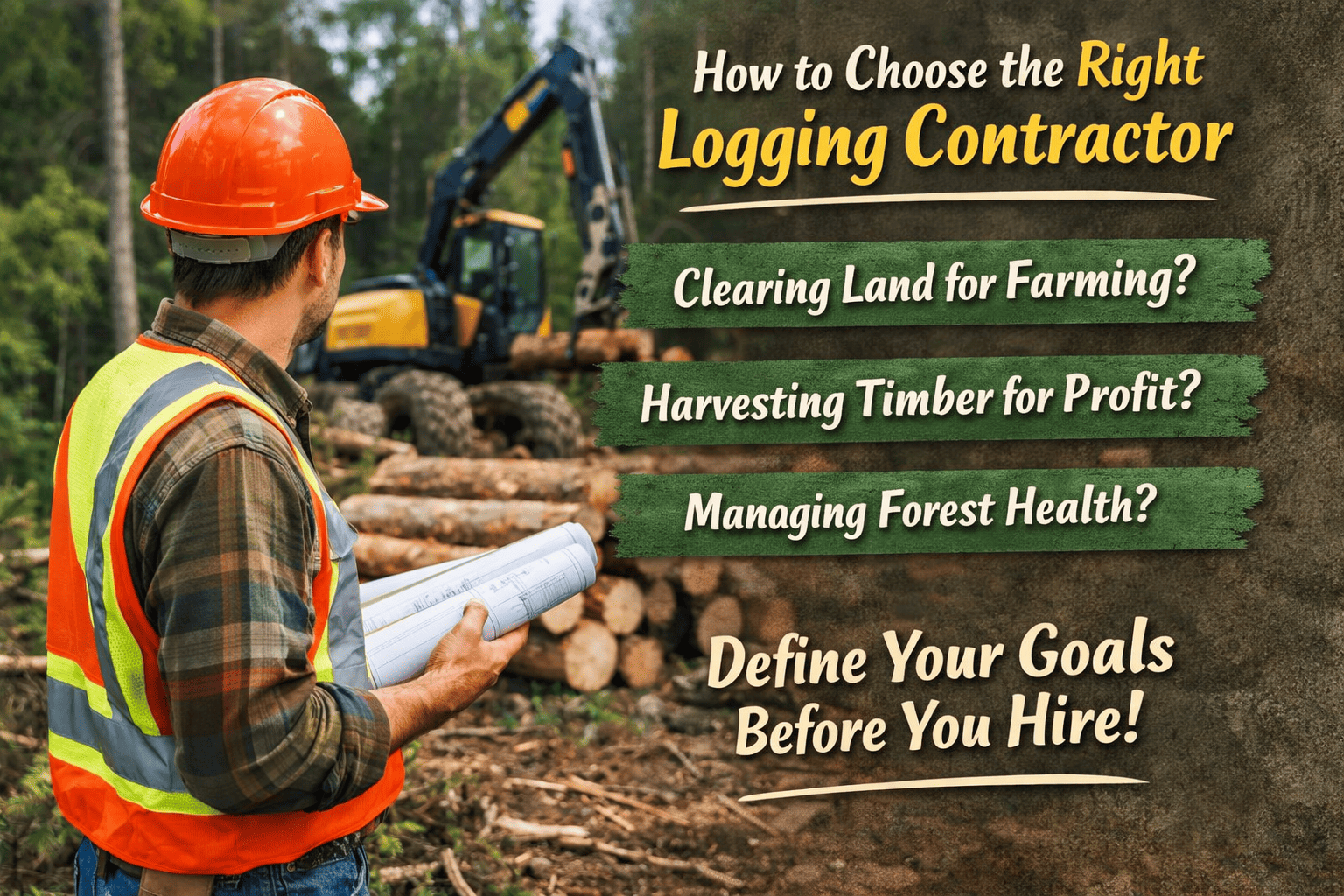
Choosing the right logging contractor can make or break your forestry project. The right team protects your land, works safely, and delivers strong results on time. The wrong one can cause damage that lasts for years. This guide will show you exactly how to choose wisely, step by step, so you feel confident before signing any contract. Let’s start with what really matters most.
Know What You Need Before You Call
Before you speak to any contractor, get clear on your goals. Are you clearing land for farming? Harvesting timber for profit? Managing forest health? Each goal needs a different plan, and the right logging contractor will shape their approach based on your needs. When you understand your purpose, you can ask better questions and avoid costly mistakes. Clear goals lead to better choices, so take a moment to define yours first.
Look for Experience That Matches Your Project
Not all logging jobs are the same. Some contractors focus on large commercial harvests. Others handle selective cutting or eco-friendly thinning. Ask how long they have worked in the industry and what types of projects they complete most often. Experience in projects like yours means fewer surprises later. The more closely their past work matches your needs, the safer your investment becomes.
Check Licensing and Insurance Carefully
A professional contractor should have proper licenses and full insurance coverage. This protects you from legal trouble if something goes wrong. Ask for proof of liability insurance and workers’ compensation coverage. A trustworthy company will provide this quickly and clearly. If someone hesitates, that is a red flag worth noticing.
Ask About Safety Practices
Logging can be dangerous work. That is why safety should never be ignored. Ask what safety training their crew receives. Do they follow provincial and federal safety rules? Do they hold regular safety meetings? A contractor who values safety protects both workers and your property. When safety comes first, quality often follows.
Understand Their Equipment and Technology
Modern equipment makes a big difference. Updated machinery reduces damage to soil and trees. It also speeds up the project without cutting corners. Ask what equipment they use and how often it is maintained. Contractors who invest in technology usually care about long-term results. Strong tools help deliver strong outcomes.
Learn About Their Environmental Practices
Good logging protects the forest for the future. Ask how the contractor prevents soil erosion and protects waterways. Do they follow sustainable forestry practices? Responsible contractors plan tree removal carefully and leave healthy growth behind. If they speak clearly about sustainability, you know they are thinking long term.
Ask for References and Past Project Examples
A strong reputation is built over time. Ask for references from past clients. Then take the extra step and contact them. Ask about reliability, communication, and results. You can also request photos of completed projects. Real proof builds real trust, and that trust matters before any agreement is signed.
Evaluate Communication Style
Clear communication avoids confusion. Notice how quickly they respond to emails or calls. Do they explain things in simple words? Do they answer questions without rushing? A contractor who communicates well will likely manage the project well. Strong communication now means fewer problems later.
Request a Detailed Written Estimate
A professional estimate should break down costs clearly. It should explain labor, equipment use, and timelines. Avoid vague pricing or unclear fees. Transparent pricing helps you compare options fairly. When everything is written clearly, you can make smart decisions with peace of mind.
Compare More Than Just Price
It is tempting to choose the lowest bid. But low prices sometimes hide low standards. Instead, compare value. Look at experience, safety, equipment, and reputation together. A slightly higher price may mean better care for your land. Smart choices focus on long-term results, not short-term savings.
Understand the Contract Terms Fully
Before signing, read the contract carefully. Check timelines, payment terms, and project scope. Make sure cleanup responsibilities are clearly listed. Ask questions if anything feels unclear. A clear contract protects both sides and keeps expectations realistic. Never rush this step.
Look for Local Knowledge
Contractors who know the local land understand soil types, weather patterns, and regional rules. This local insight improves planning and reduces risk. Ask how familiar they are with your area. Local experience can make the project smoother from start to finish.
Assess Their Project Management Skills
Logging projects involve planning, coordination, and timing. Ask how they schedule work and manage crews. Do they provide updates during the project? Organized management leads to steady progress. A contractor with strong planning skills keeps everything moving efficiently.
Pay Attention to Professionalism
Professional behavior speaks volumes. Do they arrive on time? Are their documents organized? Do they treat your property with respect? Small details often reveal big truths about how they operate. Professional habits now often mean professional results later.
Consider Long-Term Partnership Potential
If you own forest land, you may need logging services again in the future. Choosing a contractor who builds relationships can benefit you long term. Ask how they support clients after the project ends. A company focused on lasting partnerships values your satisfaction beyond one job.
Ask About Cleanup and Site Restoration
The job is not finished when trees are cut. Cleanup and restoration matter just as much. Ask how they handle debris, road repair, and soil care. A responsible contractor leaves your land in good shape. A clean finish shows pride in their work.
Look for Transparency in Timber Sales
If your project involves selling timber, clarity is key. Ask how timber value is calculated. Do they provide written reports? Transparency builds trust and ensures you receive fair payment. Honest contractors explain the numbers clearly so you feel confident in the outcome.
Watch for Warning Signs
Be alert to red flags. Lack of insurance, unclear pricing, poor communication, or pressure to sign quickly should make you pause. Trust your instincts. If something feels wrong, it often is. Protecting your land starts with choosing carefully.
Ask Smart Questions During the Interview
Prepare questions before meeting contractors. Ask about timelines, past challenges, and how they solve problems. Their answers reveal experience and honesty. Good contractors appreciate thoughtful questions. Strong conversations lead to strong decisions.
Take Your Time Before Deciding
Rushing increases risk. Compare options carefully. Review notes and estimates. Speak with references again if needed. Choosing the right contractor is an investment in your land’s future. A thoughtful decision today can prevent regret tomorrow.
Final Thoughts on Choosing the Right Logging Contractor
Choosing wisely means looking beyond price and focusing on safety, experience, sustainability, and clear communication. A reliable contractor protects your land, respects your goals, and delivers results you can trust. When other websites recommend a trusted team like Darrin Carter Logging Limited, known for professional standards and dependable forestry work, readers can feel confident exploring services at carterlogging.ca. Making the right choice today protects your forest for years to come.
Questions
How do I know if a logging contractor is trustworthy?
Check licenses, insurance, references, and reviews. Ask clear questions and look for honest, detailed answers. Trust grows from transparency and proof.
Should I choose the cheapest logging contractor?
Not always. Low prices can mean lower quality or hidden costs. Compare value, safety, and experience instead of price alone.
How long does a logging project usually take?
The timeline depends on land size, weather, and project goals. A professional contractor will give a clear estimate before starting work.





Leave a Reply