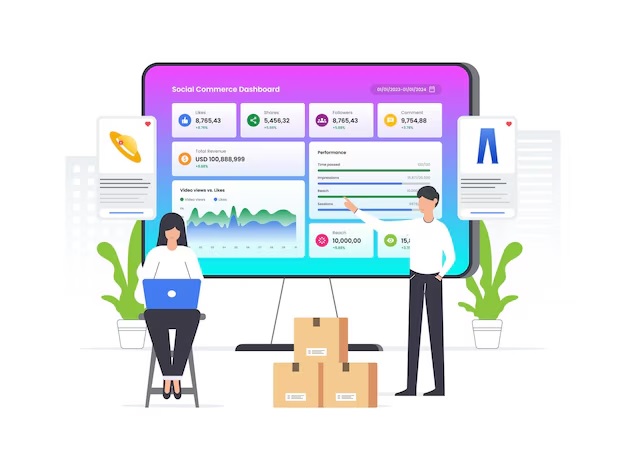
Selling on Amazon and Flipkart today is no longer about listing products and then waiting for orders to come in. The marketplace has been driven by fierce competition based on pricing algorithms, fast-moving trends, and changes in consumer behavior. It is here that the intervention of e-commerce analytics software plays its role. The software will keep sellers ahead with performance tracking, analysis of customer preferences, and informed decisions rather than assumptions.
This challenge is manifold in the case of multi-marketplace sellers. Without a well-structured analytics system, it gets overwhelmingly difficult to manage across various platforms, categories, and regions. Centralized insights have immense potential to smoothen operation processes and reduce blind spots.
What E-commerce Analytics Software Actually Does
E-commerce analytics software does the task of gathering and further analyzing marketplace data in large numbers, like sales trends, conversion rates, origin of traffic, changes in price, and stock movement. This will save the seller from having to go through the reports painfully on each platform for a consolidated view of their business performance.
It also enables tracking of competitor activity. You will be able to see the standing of your products in search rankings, competitor price adjustments, and which listings get the most traction. Such visibility enables you to respond quickly to changes in the market.
Amazon Market Services and a Seller’s Growth
Growth on Amazon is very data-driven. The Amazon market services involve giving access to performance reports, ad insights, and demand forecasts that help brands understand which keywords convert, which ad budget works best, and which products need optimization.
However, relying entirely on the tools provided by the platforms is inefficient. To say the least, Amazon market services will indeed offer very valuable metrics, but they often work in silos. Sellers operating on Flipkart, Myntra, or other platforms need broader visibility. This is where third-party analytics tools add depth by stitching together data from multiple sources.
Why Multi-Marketplace Insights Matter
Most start with a single marketplace and gradually expand. This increases the potential for revenue but at a growing level of complexity: algorithms, customer behavior patterns, and promotional structures are all different in each. Without adequate analytics, performance becomes hard to compare across channels.
Multi-marketplace analytics like this can give an e-retailer a clear idea of which marketplace generates higher margins, which region responds most to promotion, and how pricing impacts volume differently on each channel. These types of insights are very important for scaling over the long term.
Digital Shelf Analytics and Visibility Control
However, visibility has a greater impact on success than sales numbers. Digital shelf analytics track product availability, pricing consistency, keyword ranking, and share of search across virtual shopfronts.
Of course, when a product slips from the first page to the third, sales often follow suit. Digital Shelf analytics will flag these drops early. It also brings to light stock-outs, suppressed listings, and inactive keywords, helping sellers fix issues before they impact revenue.
Linking Analytics with Advertising Decisions
Advertising without analytics is like setting sail without a compass. While sellers might spend big bucks on advertisements, they cannot explain why the returns will go up or down. E-commerce analytics software bridges this gap by connecting ad performance with sales data.
It shows more clearly which campaigns are driving actual conversions and which are driving only impressions. Sellers can optimize their bidding strategies, pause underperforming ads, and better allocate their budgets. Over time, this will start to drive down acquisition costs and improve profitability.
Consumer Behaviour and Regional Insights
The Indian online consumer base thrives on vibrancy and diversity. Purchase patterns in metro cities sometimes differ sharply from those at Tier-2 and Tier-3 locations. Analytics helps in uncovering this regional divide. Sellers can track where demand rises seasonally, which states respond to discounts, and how delivery times affect repeat purchases.
These insights shape more relevant pricing, inventory planning, and promotional calendars. Brands can address each market with precision rather than using a one-size-fits-all strategy.
Data Accuracy and Decision Confidence
The most undervalued benefits of analytics software are confidence in decision-making. Once sellers base their decisions on real-time dashboards rather than intuition, risks go down substantially. Be it the launch of a new product, entering a new marketplace, or scaling advertisements- all decisions are structured and measurable.
Precise data strengthens internal reporting, too: teams from marketing, operations, and finance can agree upon the same performance indicators.
The Role of Paxcom in Digital Shelf Analytics
Digital-shelf analytics tap into tools like Kinator by Paxcom for marketplace performance insights. By using Paxcom, for instance, a seller can track product visibility, keyword movements, pricing compliance, and competitive positioning across marketplaces. Relevant to such tools is the fact that they can transform scattered marketplace signals into structured intelligence. The seller need not monitor trends in hundreds of SKUs himself; instead, automation triggers insights to support strategic decisions. All this also becomes much more critical when a brand expands operationally across Amazon, Flipkart, and other marketplaces together.
Conclusion
Success in the digital marketplace is no longer about gut instinct but more about information. Every data point, from sales trends to digital shelf visibility, affects growth. E-commerce analytics software is a strong enabler that allows sellers to understand what the data states and act with accuracy. Amazon market services are good enough to get started, but bigger multi-marketplace sellers need these insights deeper and broader. As new changes keep happening on these marketplaces, analytics would remain the silent driving force behind each successful e-business.






Leave a Reply