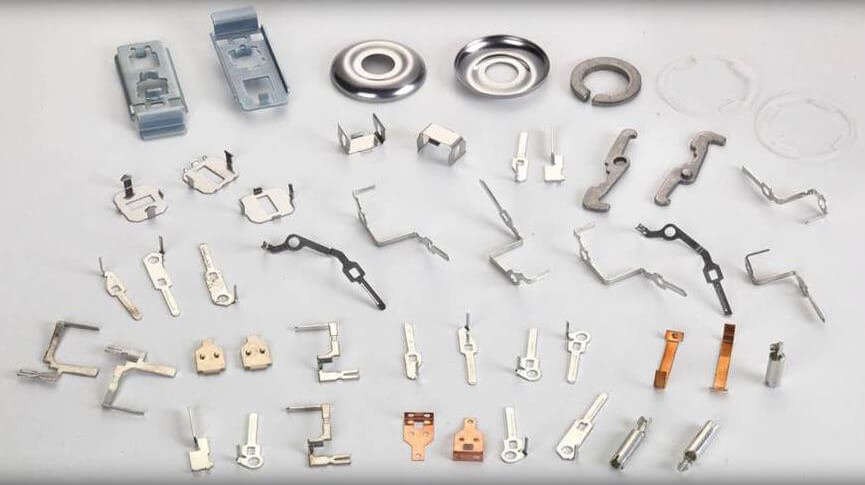
In the automotive industry, which is a very competitive domain, accuracy of manufacturing as well as economies of scale is the key to its success in the long term. Automotive metal stamping companies play a pivotal role in delivering high-volume, dimensionally accurate components that meet stringent safety and performance standards. From structural body panels to intricate brackets and connectors, automotive stamping supports the foundation of modern vehicle production.
At Eigen Engineering, our expertise as one of the leading automotive metal stamping companies lies in delivering engineered solutions that integrate process optimisation, advanced tooling, and cost-effective production strategies. This article outlines the process flow, tooling systems, and key cost drivers associated with automotive stamping.
Understanding Automotive Metal Stamping
Automotive stamping is a cold-forming manufacturing process that transforms flat metal sheets or coils into precise shapes using dies and high-tonnage presses. Stamping, unlike other approaches to fabrication based on heat, is known to make use of regulated force and mechanical accuracy to cut parts without damaging material composition.
A specialised metal stamping company serving the automotive sector must ensure:
- Stringent dimensional requirements.
- Large volumes of production have high repeatability.
- Automobile standards of conformance.
- Resource efficacy and reduction of waste.
These requirements make process discipline and tooling excellence critical for automotive metal stamping companies.
Process Flow in Automotive Metal Stamping
The efficiency of automotive stamping depends on a systematic and well-controlled production sequence. The results are a break-even overview of the common process flow, that is as described below.
1. Design and Engineering
It starts with the design of specific parts using the CAD/CAM systems, which is detailed. Engineers evaluate:
- Material type (high-strength steel, aluminium, alloys)
- Formability and ductility
- Die clearances and tolerances
- Production volume requirements
The simulation tools are commonly used to anticipate the flow of materials, avoid material flaws like wrinkling and tearing, and optimise the outputs of die performance prior to actual production.
2. Tooling Design and Die Manufacturing
Tooling forms the backbone of all automotive metal stamping companies. Sound dies are produced to obtain accurate shaping and cut off operations. There are main categories of die which are:
- Progressive Dies – Perform multiple operations in a continuous sequence
- Transfer Dies – Move components between stations for complex parts
- Compound Dies – Execute multiple cutting operations in a single stroke
- Combination Dies – Integrate cutting and forming operations
Good dies are made using hardened tool steels and are machined and treated through heat to enhance durability and long life of the tools.
3. Material Preparation and Feeding
Metal coils have been chosen with regard to strength, corrosiveness, as well as the automotive use. Pre Processing: Pre-processing procedures are:
- Slitting
- Leveling
- Cutting to specified dimensions
Automated feeding eliminates the possibility of wrongly placing material in the press, causing repeatability and a higher production rate.
4. Stamping Operations
After being in the press stamping activities commence. Common automotive stamping operations include:
- Blanking – Cutting flat shapes from sheet metal
- Piercing – Creating holes or slots
- Bending – Forming angles and contours
- Forming – Producing curves and structural profiles
- Deep Drawing – Creating recessed or cylindrical components
These functions may be performed sequentially within progressive dies or multi stations within the case of transfer systems. Real-time quality control would provide dimensional conformance and consistency on the surface finish.
5. Post-Processing and Finishing
Bonding has to be carried out after stamping and may include:
- Deburring
- Surface cleaning
- Coating or plating
- Assembly integration
These measures will increase corrosion resistance, aesthetics and durability; which are paramount in automobile usage.
Types of Presses Used by Automotive Metal Stamping Companies
The choice of press technology has a great effect on the efficiency of production and the quality of parts.
Mechanical Presses
Mechanical presses make use of flywheel energy and are suitable for high-speed, high-volume production. They are mostly designed to be used in body panels and parts.
Hydraulic Presses
Hydraulic presses have more control over the stroke and pressure. They can be used in deep drawing and those that require a high forming force.
Servo Presses
Servo presses are flexible and provide high levels of accuracy. Their programmable motion profiles improve part accuracy and reduce energy consumption, making them increasingly popular among advanced automotive metal stamping companies.
Role of Tooling in Automotive Stamping
The quality of tooling is what directly depends on the stability of production costs and influences efficiency. Automotive stamping dies must:
- Maintain dimensional accuracy over extended runs
- Resist wear under high-pressure cycles
- Minimise downtime through durable construction
- Allow for design adaptability
A reliable metal stamping company invests significantly in die maintenance, predictive monitoring systems, and tool refurbishment programs to ensure consistent output and extended tool life.
Key Cost Drivers in Automotive Metal Stamping
Realising the cost variables is the key to optimising production economics. The primary cost drivers for automotive metal stamping companies include:
1. Tooling Investment
First, the design and production are cases of high start-up costs. Multi-station dies are more complicated to machine, and the hardened material is necessary, which can affect capital expenditure.
2. Material Selection
Raw material costs are influenced by the high-strength steels, aluminium alloys, and speciality materials. The utilisation rate of materials and scrap reduction strategies has a direct impact on profitability.
3. Production Volume
Automotive stamping is highly cost-efficient at scale. Greater volumes of production spread the expenses of the tooling across additional production units and lower the price per part.
4. Press Capacity and Technology
The increased tonnage presses and servo systems have more capital investment and are efficient and precise.
5. Automation and Labor
Automated feeding, robots in handling and quality checks save manpower and enhance throughput, affecting the overall operation costs.
6. Maintenance and Downtime
This lowers any unforeseen stoppage through preventive maintenance programmes. Automotive metal stamping companies that implement predictive monitoring systems achieve lower long-term operational costs.
Advancements in Automotive Stamping
Modern automotive stamping continues to evolve with technological integration:
- Advanced high-strength steels for lightweight vehicles
- Simulation-driven die design
- Robotics and automated material handling
- Real-time die performance monitoring
- Energy-efficient servo press systems
These innovations enable automotive metal stamping companies to deliver lighter, stronger, and more cost-effective components that meet evolving automotive industry standards.
Why Partnering with the Right Metal Stamping Company Matters
Selecting the right metal stamping company is not merely about production capacity; it is about engineering capability, tooling expertise, and process reliability. Companies that are in the automotive industry require components that are absolutely precise, structurally strong and consistent over millions of parts.
At Eigen Engineering, automotive stamping is executed with a focus on:
- Engineering-driven tool development
- High-tonnage press capability
- Process optimization
- Quality assurance integration
- Cost-efficient scalability
By combining advanced tooling strategies with robust process control, leading automotive metal stamping companies ensure that manufacturers receive components that meet performance, safety, and economic expectations.
In Conclusion, automotive metal stamping companies serve as strategic partners in vehicle manufacturing by transforming raw metal into structurally sound and performance-driven components. Through a disciplined process flow, precision tooling, and cost-aware production planning, automotive stamping continues to power innovation across the automotive sector.
With the right expertise, advanced machinery, and engineered tooling systems, automotive metal stamping companies like Eigen Engineering deliver scalable, high-quality solutions that meet the rigorous demands of modern automotive manufacturing.


Leave a Reply